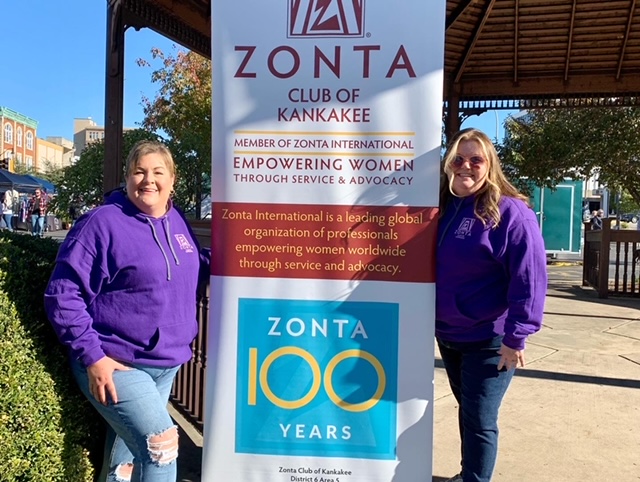
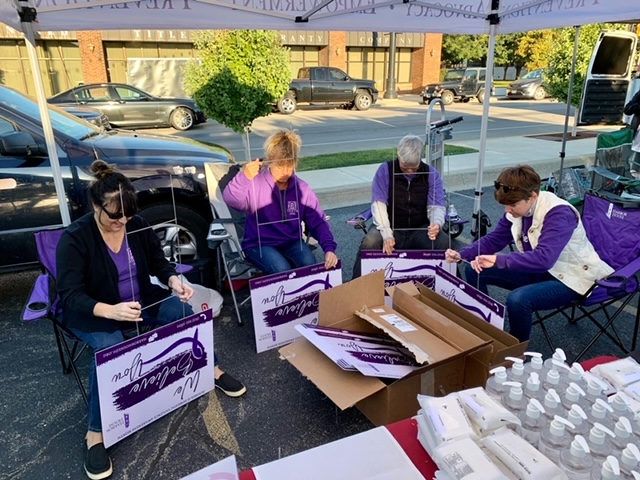
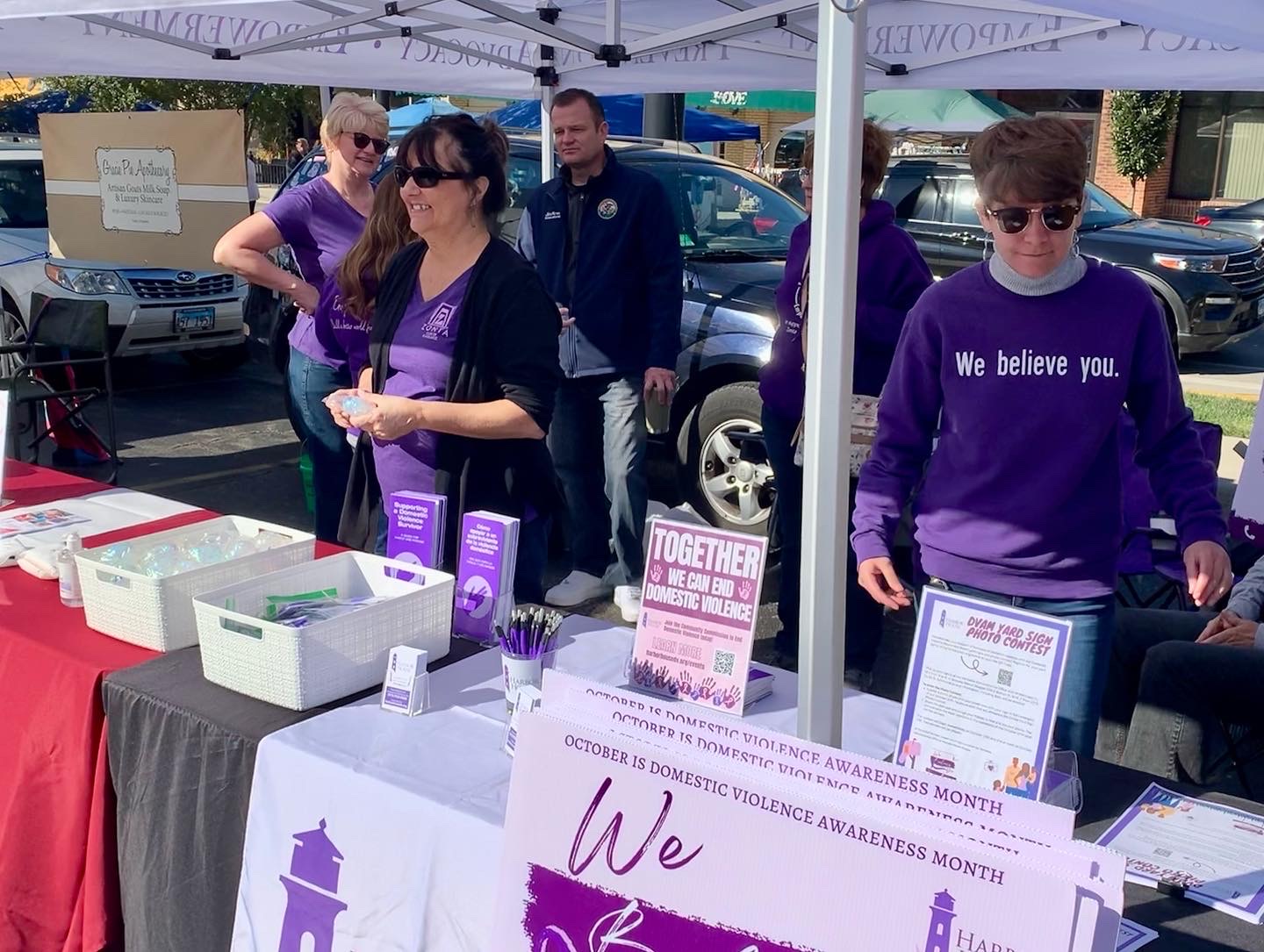
The Zonta Club of Kankakee, USA, held an EmpowHERment event at their local farmer’s market. There was a booth with all kinds of information about a local domestic violence shelter and Zonta. Several members wore purple shirts with the words, “build a better world for women and girls” in support.
Club President Tamera “Tami” Galbreath spoke to attendees about Zonta and the important work that the club does. The local domestic violence shelter executive director also discussed domestic violence and the agency. The district attorney also appeared to speak out about domestic violence and its impact on the community.
The club also walked in their towns to support survivors of domestic violence.
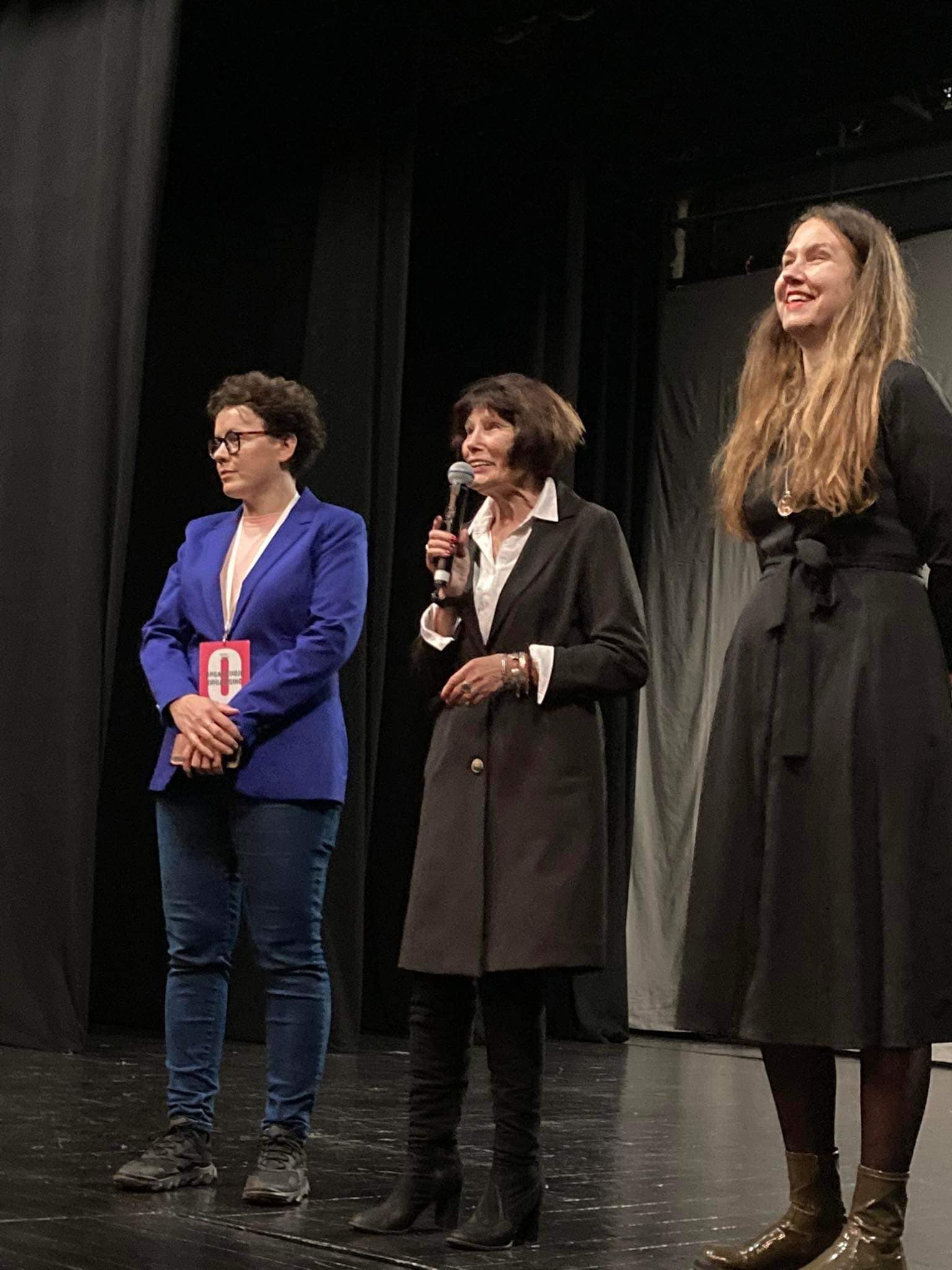
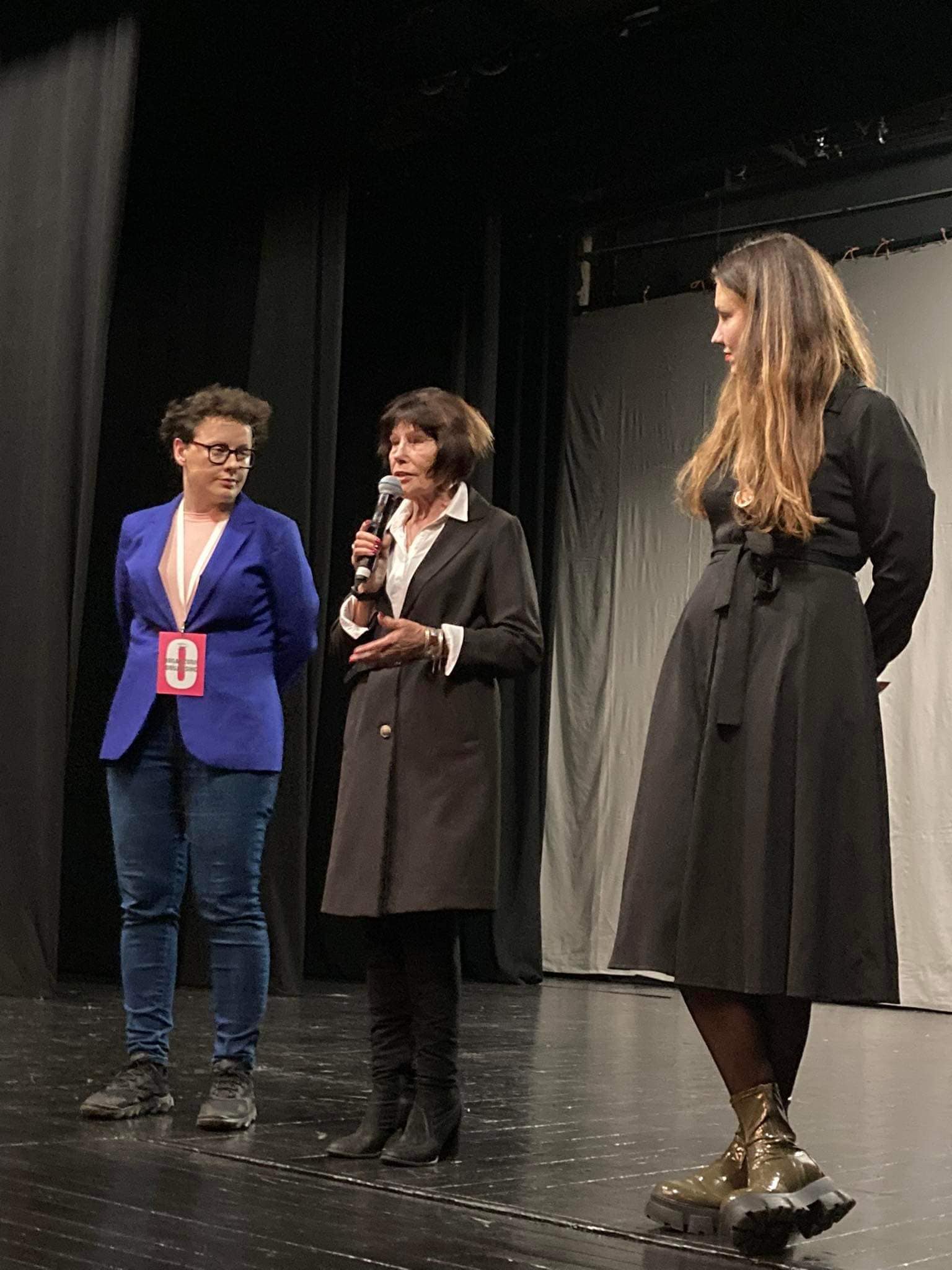
On 25 October, the Zonta Club of Alytus, Lithuania, collaborated with the Alytus City Theatre and the Women’s Crisis Centre to host a screening of the film, Chayalla.
The film depicts a young French woman named Chayalla who is trying to break off her relationship with an abusive partner and win custody of her sons. Throughout the film, she is torn between securing a safe and healthy home for herself and her children and believing that she can “fix” her husband. The filmmakers have spent four years filming Chaylla’s life, where the desire for freedom and justice is closely intertwined with control and dependence on violence.
Before the film started, Club Vice President Ona Adelė Berškienė gave the opening remarks and recalled that her club was the first organization in Alytus to support domestic violence survivors. In 2001, the Alytus Women’s Crisis Centre was established, which later grew into an independent institution.
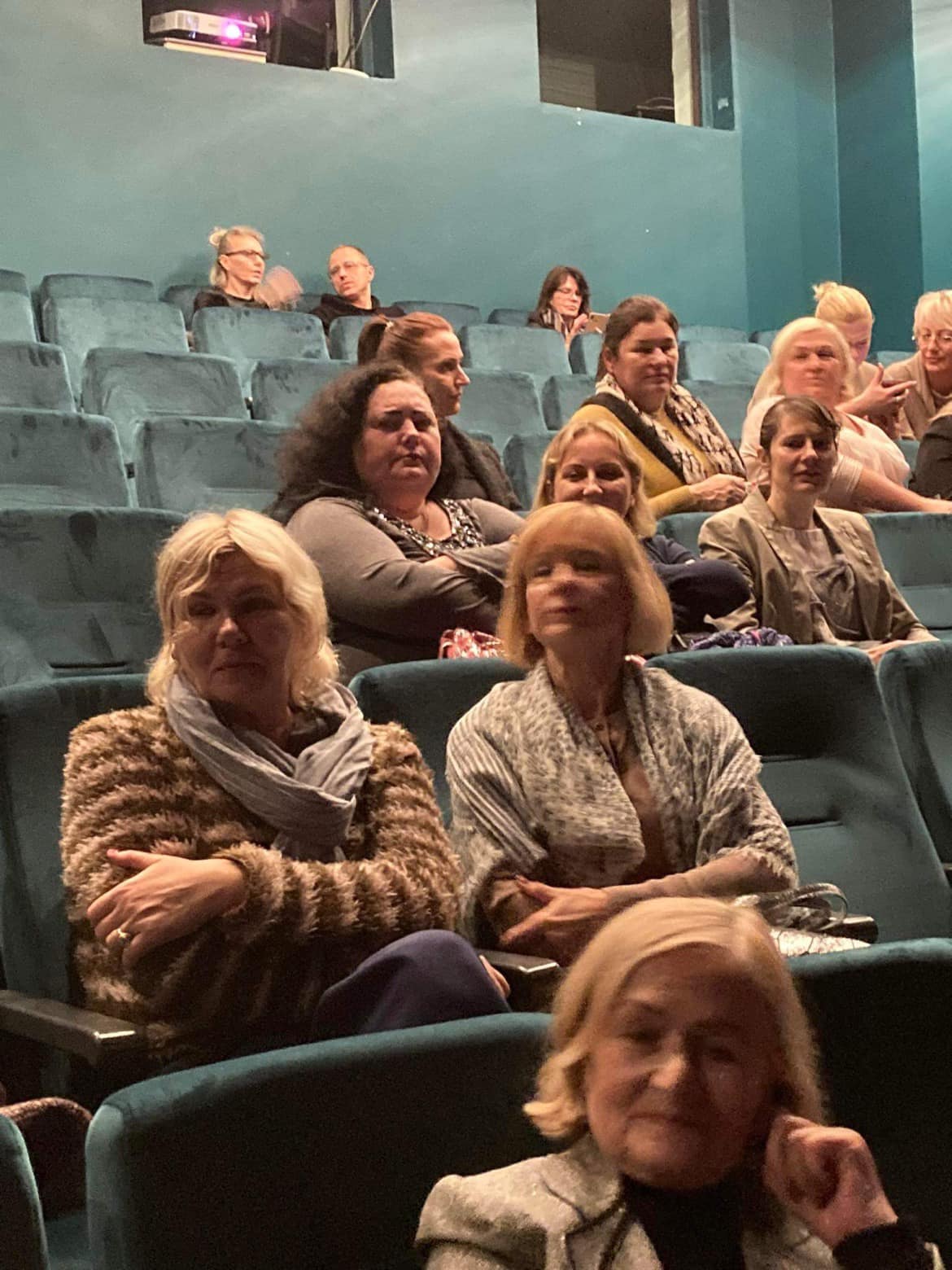
After the film, the club discussed with the audience if Chayalla was “guilty herself” for being in an abusive relationship. Many Lithuanian online forums agreed that she was at fault because she could have just walked away and left her husband. However, the club told the audience that judging and jumping to conclusions is easy. We do not always know the whole story as we rush to find simple answers to more nuanced questions like do women know that they are entering an abusive relationship? Why does it often take years for them to leave their abusers? Does violence even have a gender?
To help the audience understand better a victim’s state of mind, the club invited Rugilė Bukevičiūtė, a lawyer and project manager at the Women’s Information Centre, to speak. Rugilė has many years of experience with domestic violence and helping women leave violent relationships. The conversation was led by the Director of the Lithuanian Centre for Human Rights Jūratė Juškaitė. They also discussed physical, psychological, economic, sexual and other forms of domestic violence. The participants were advised on how to help someone experiencing violence and where to turn for help. The statistics are sad, as every third woman, every fifth man and every tenth child is subjected to domestic violence.
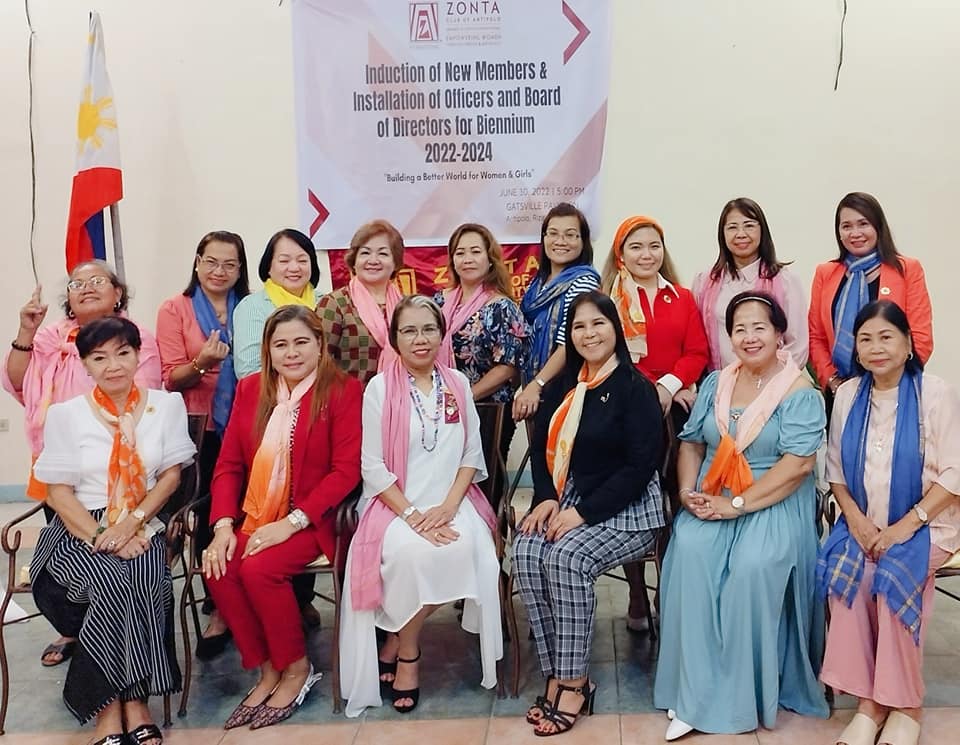
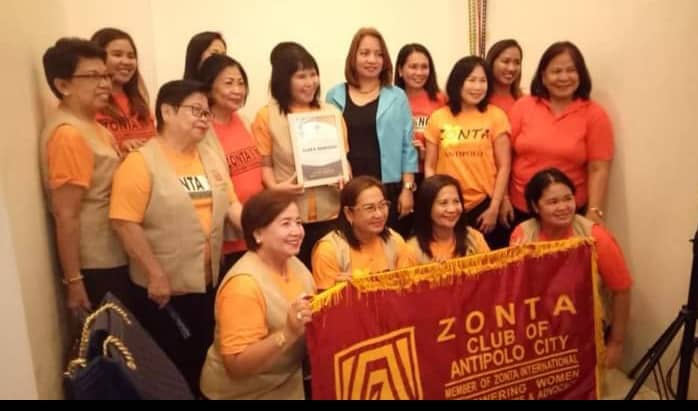
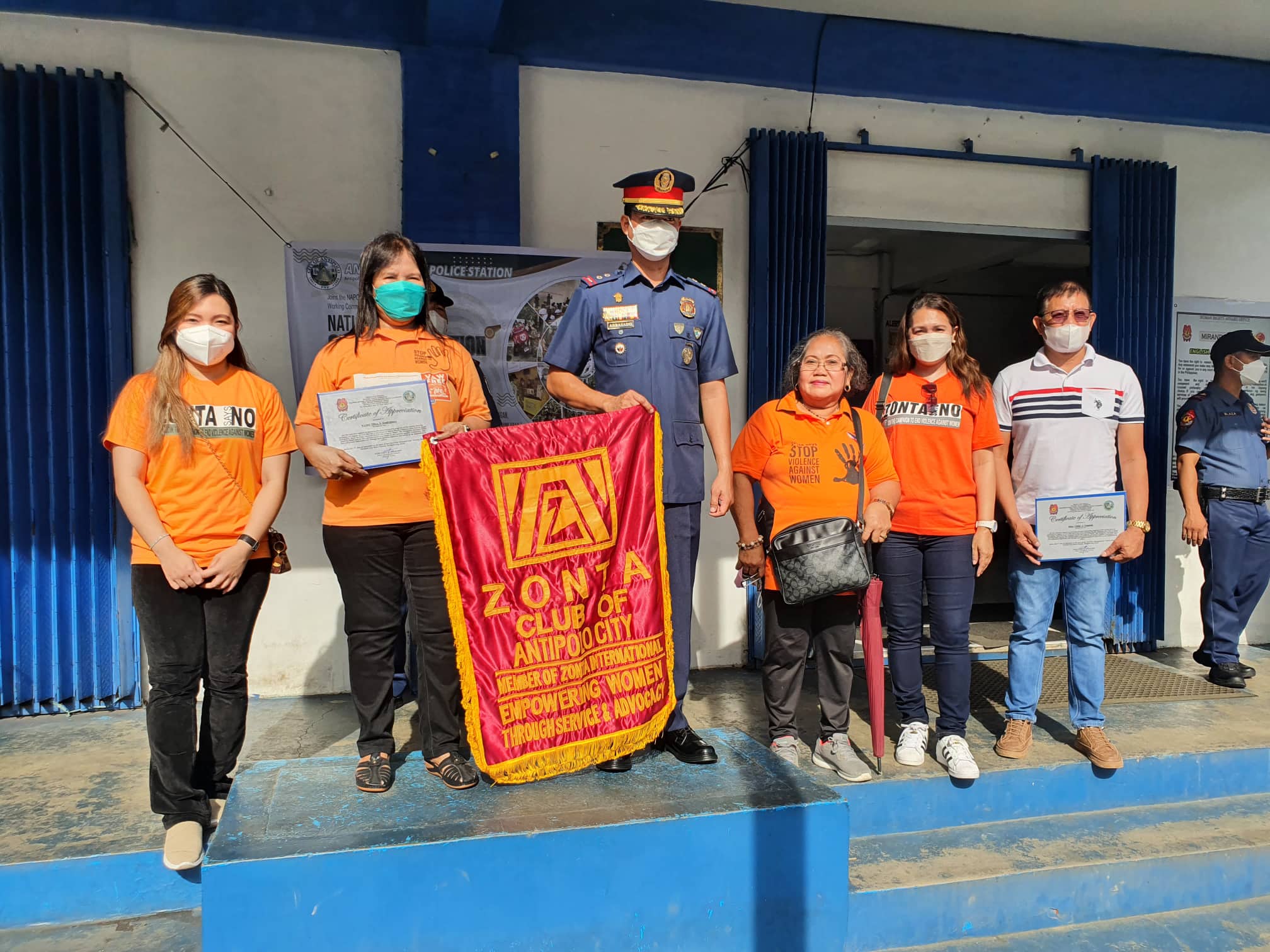
The Zonta Club of Antipolo, Philippines, is passionate about Zonta Says NO to Violence Against Women campaign. Recognized by the city mayor and the social welfare department for preventing violence against women and children, the club has won many awards.
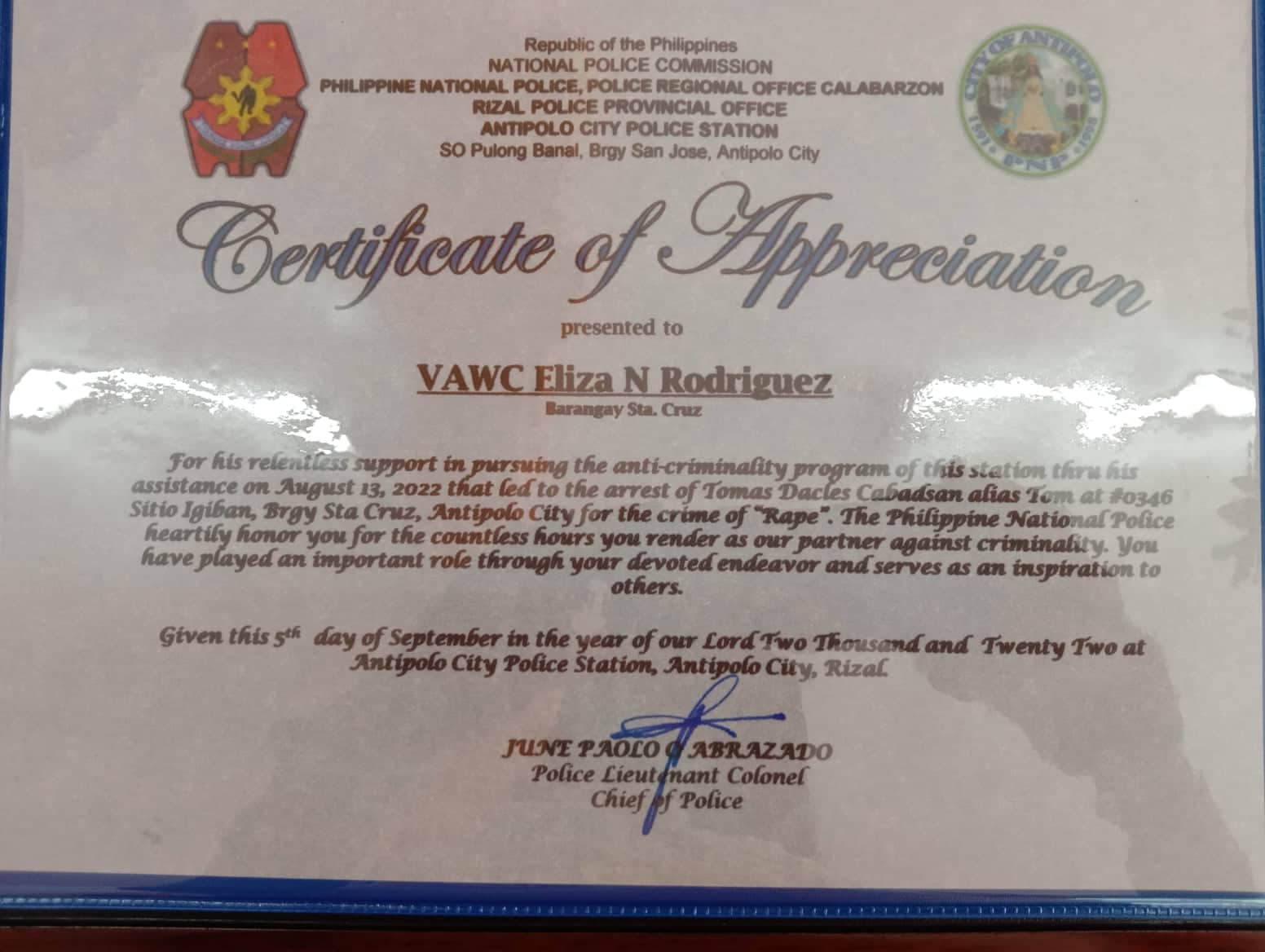
The club received first-place awards for “Most Outstanding VAWC 2018 -2019” and “Most Child-Friendly” in 2019. Then, on 23 August, club member Eliza Rodriguez received a recognition award from the Philippine National Police for helping them capture a perpetrator of VAWC.
For all their efforts, the club is recognized by the city government of Antipolo as one of the accredited Non-Government Organizations (NGOs). They are able to sit in the different city councils representing the voice of women and children, such as in the Antipolo City Development Council, the Antipolo City Local Health Board and more. The club is committed to creating awareness among women and children continuously.
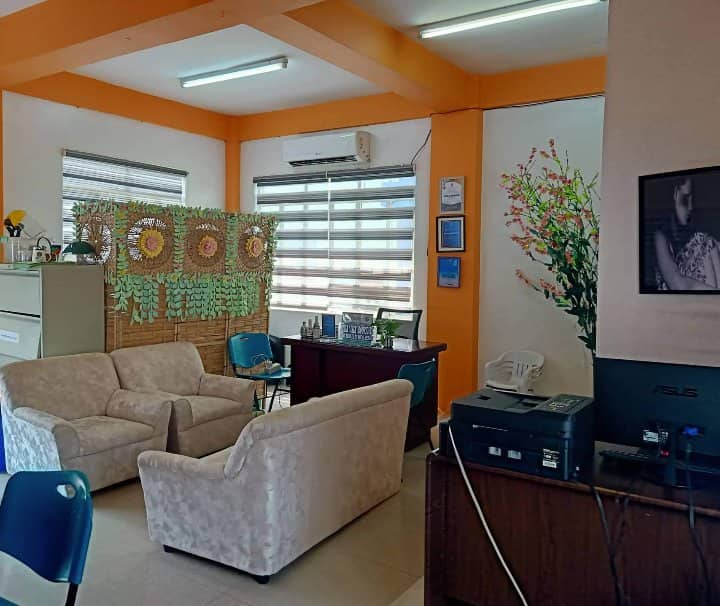
“To show my support, I even painted my office orange to support this advocacy. I firmly believe that by empowering women, our society’s economic conditions also improve,” said Eliza. “It will help eliminate poverty, sex exploitation, and misery from society. So let us continue to educate and empower women to enlighten the world.”
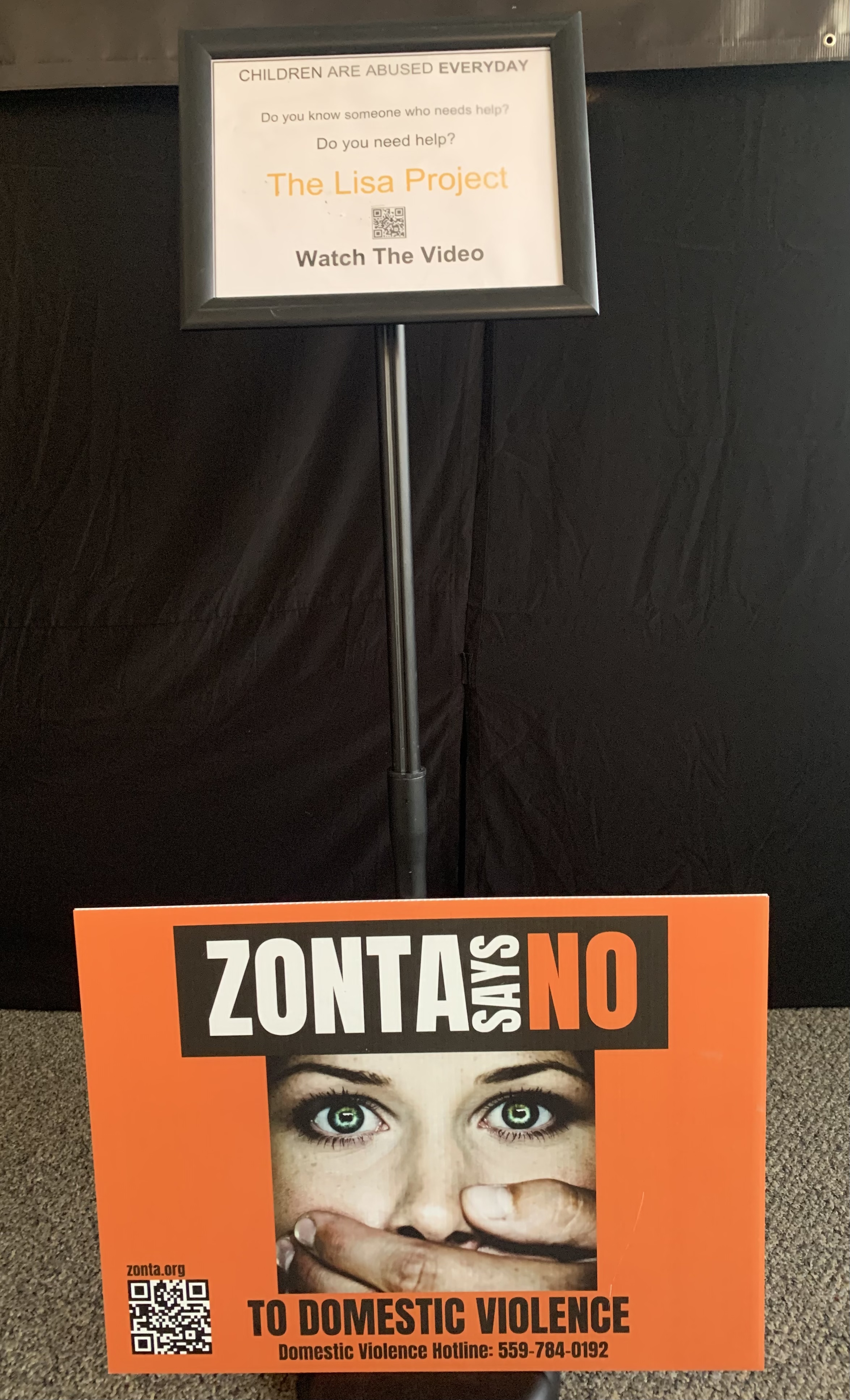
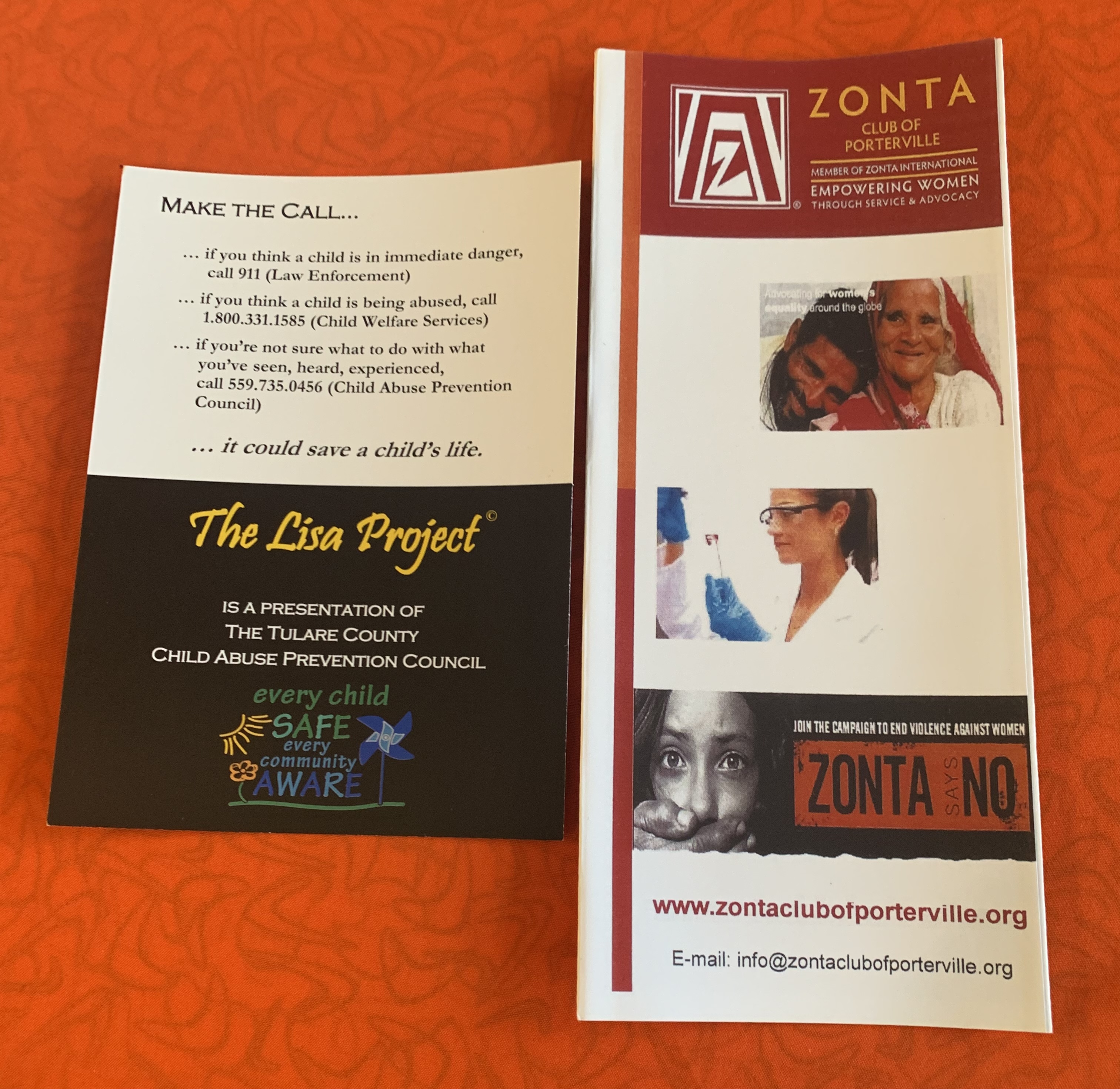
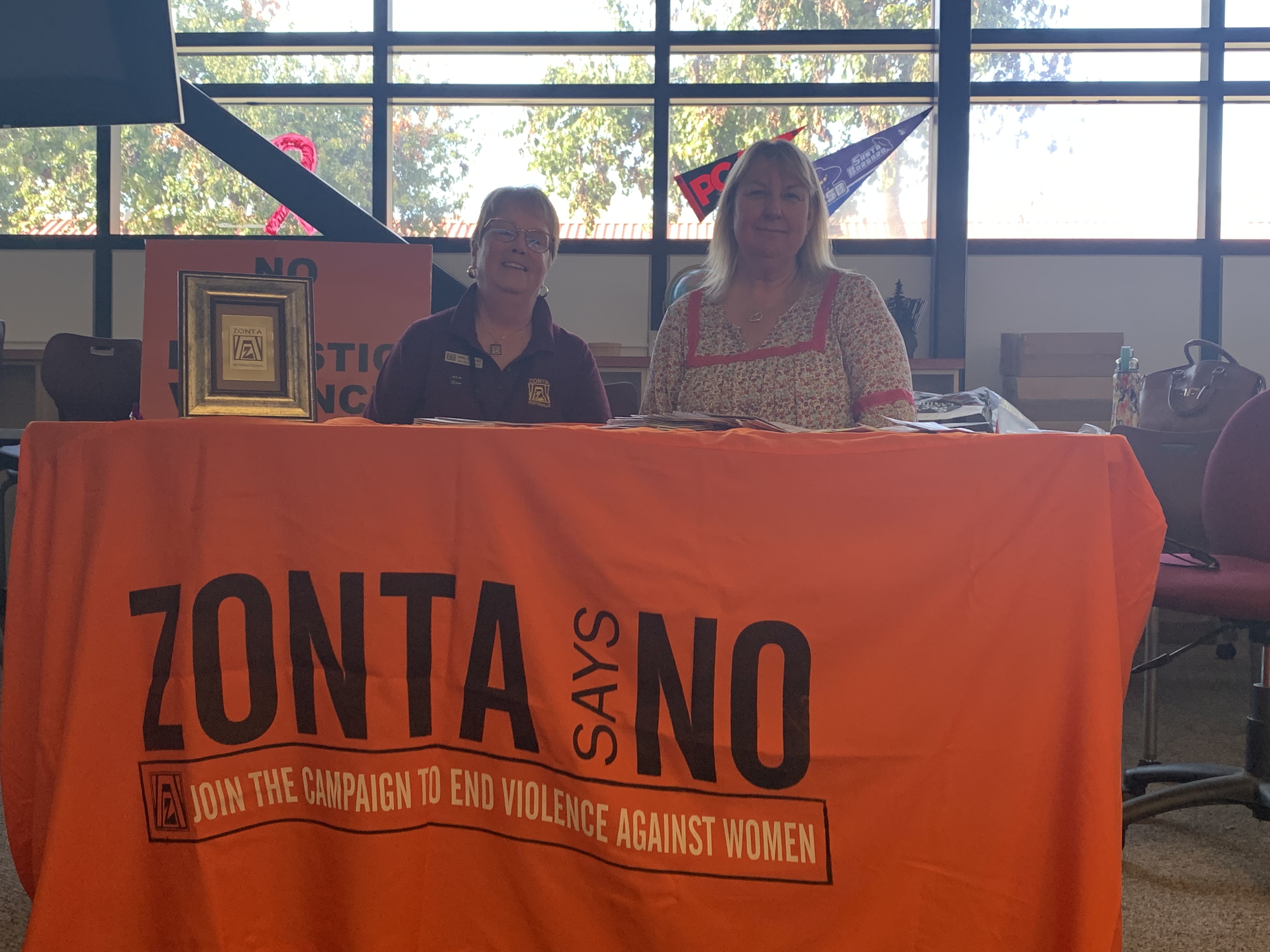
In coordination with the Tulare Country Child Abuse Prevention Council, the Zonta Club of Porterville and the Z Club at Granite Hills High School, USA, hosted the Lisa Project in 10, a 10-minute unique multi-sensory exhibit experience allowing the visitor to hear, see and experience the reality of the world of child abuse, domestic violence and human trafficking.
Through audio narration from a child’s perspective, visitors are guided room by room through scenarios depicting abuse. This experience immerses each guest into the world these victims face daily. The clubs hope that guests will walk away with an understanding of the various forms of abuse, including sexual abuse, and can use that knowledge to help save a person someday.
Admission was free, and the club handed out information from the club and local emergency shelters as guests exited the exhibit.
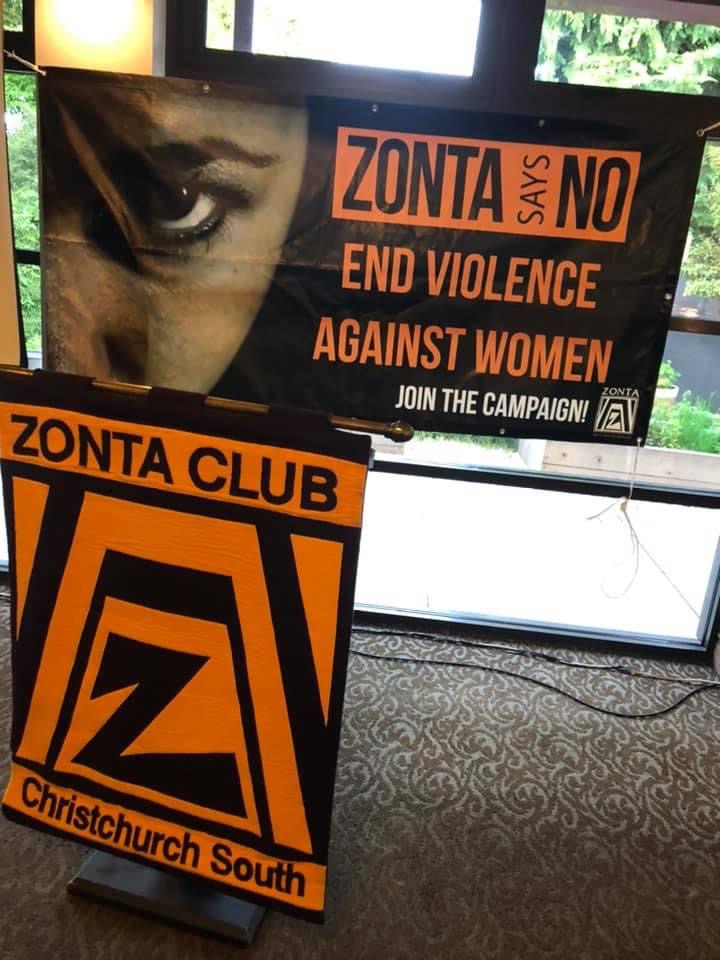
Amping up for the 2022 Zonta Says NO Against Violence to Women campaign, the Zonta Club of Christchurch South, New Zealand, is getting ready to plan their annual Zonta Says NO breakfast.
Every year since 2009, the club and its Golden Z clubs deck out in orange apparel and rally their community to attend the special breakfast. Always boasting more than 100 hungry patrons and supporters from local community and service groups, it is the largest specific Zonta Says NO event in their city.
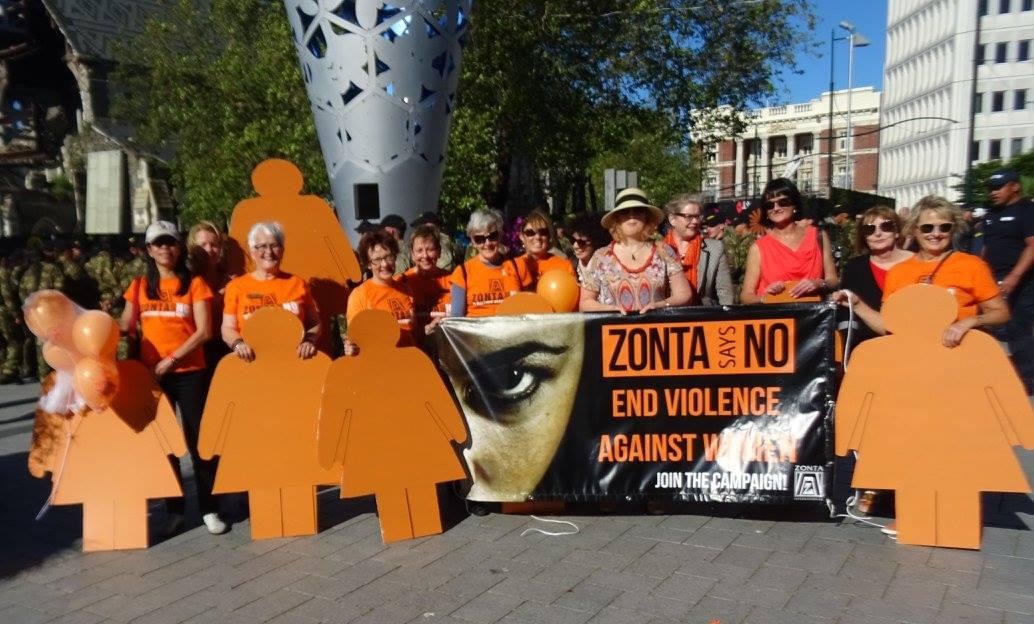
Not only does the club provide a meal, but they also invite an inspirational speaker. Past speakers included Louise Nicholas, Officer of the New Zealand of Merit, Judge Jane McMeekan, former Minister of Justice Amy Adams and Leanne McSkimming from the New Zealand Police. After breakfast, everyone marches through Christchurch carrying large orange cut-out dolls and displaying Zonta Says NO banners in Cathedral Square to mark White Ribbon Day.
Since 2015, the club has initiated illuminating various public structures in orange on the first day of Zonta International’s 16 Days of Activism Against Gender-Based Violence. Orange-lit buildings in their city have included the Christchurch International Airport’s control tower and terminal building and the Isaac Theatre Royal. The club actively supports White Ribbon and UN Women events, and they are constantly looking for opportunities to display our banners and orange cut-outs.
The Zonta Club of New Taipei, Republic of China (Taiwan), recently held their annual scholarship ceremony at the Caesars Hotel Banqiao. The club handed out three scholarships to 16 students this year. Governor Vivienne Shen attended the event and encouraged the students.
Ms. Li Zimei, the scholarship committee chairman, awarded scholarships to newly immigrated students with unique talents coming from lower-income households this year.
Representatives from the students’ schools attended the event, including the Hungkuo Delin University of Technology chairman, the dean of academic affairs Li Jiande and Jinshuan High School Lai Laizhan.
One student, whose mother is of Maori descent and their father is from New Zealand, gave a speech in the Maori language, English and Chinese. Their speech won unanimous praise from the audience.
Other students also gave a sincere acceptance speech, and they wrote thank you cards to the club members.
The club combined the award ceremony and the Zonta Says NO campaign. The club, students and school representatives all pledged to say NO to violence against women together.
The club looks forward to making society better through Zonta’s announcement and determination.
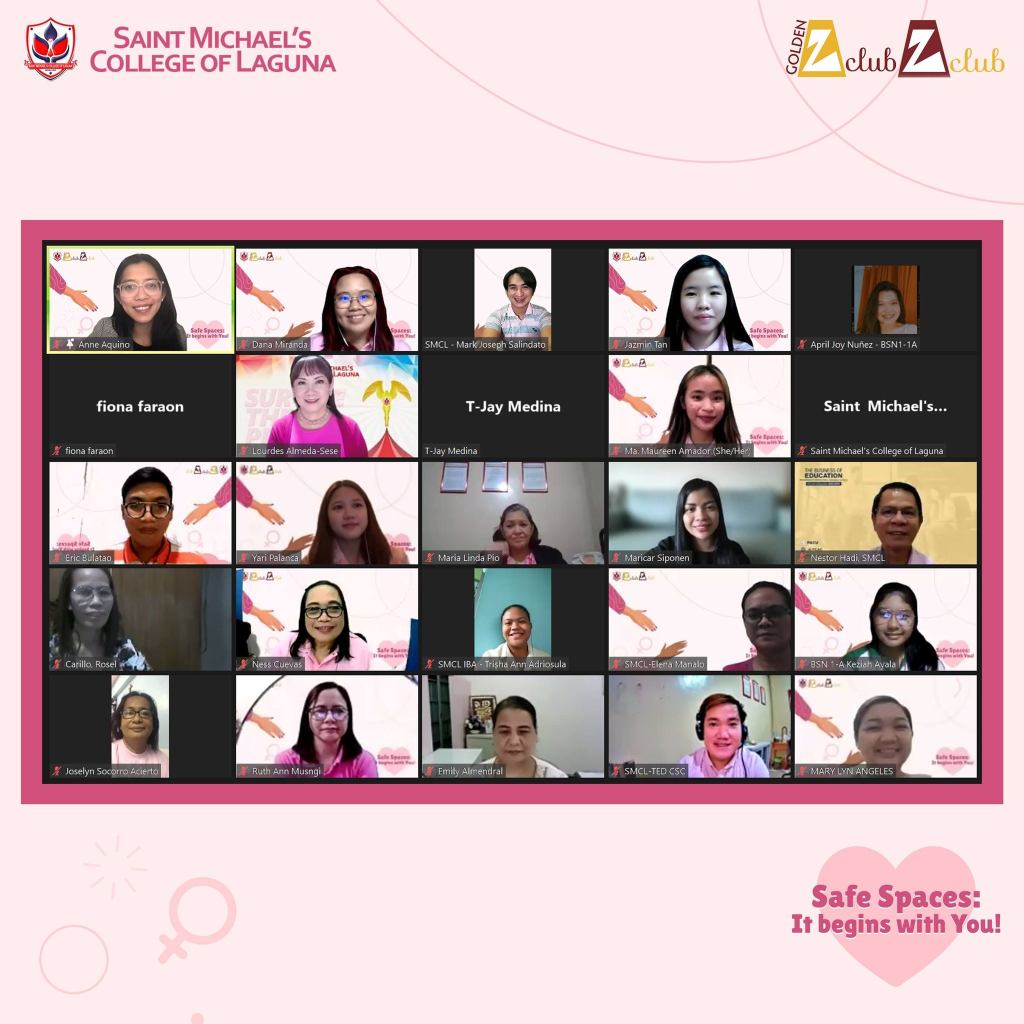
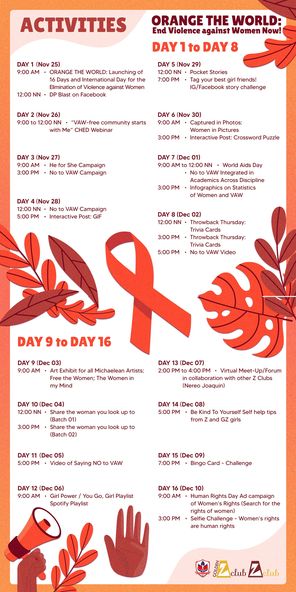
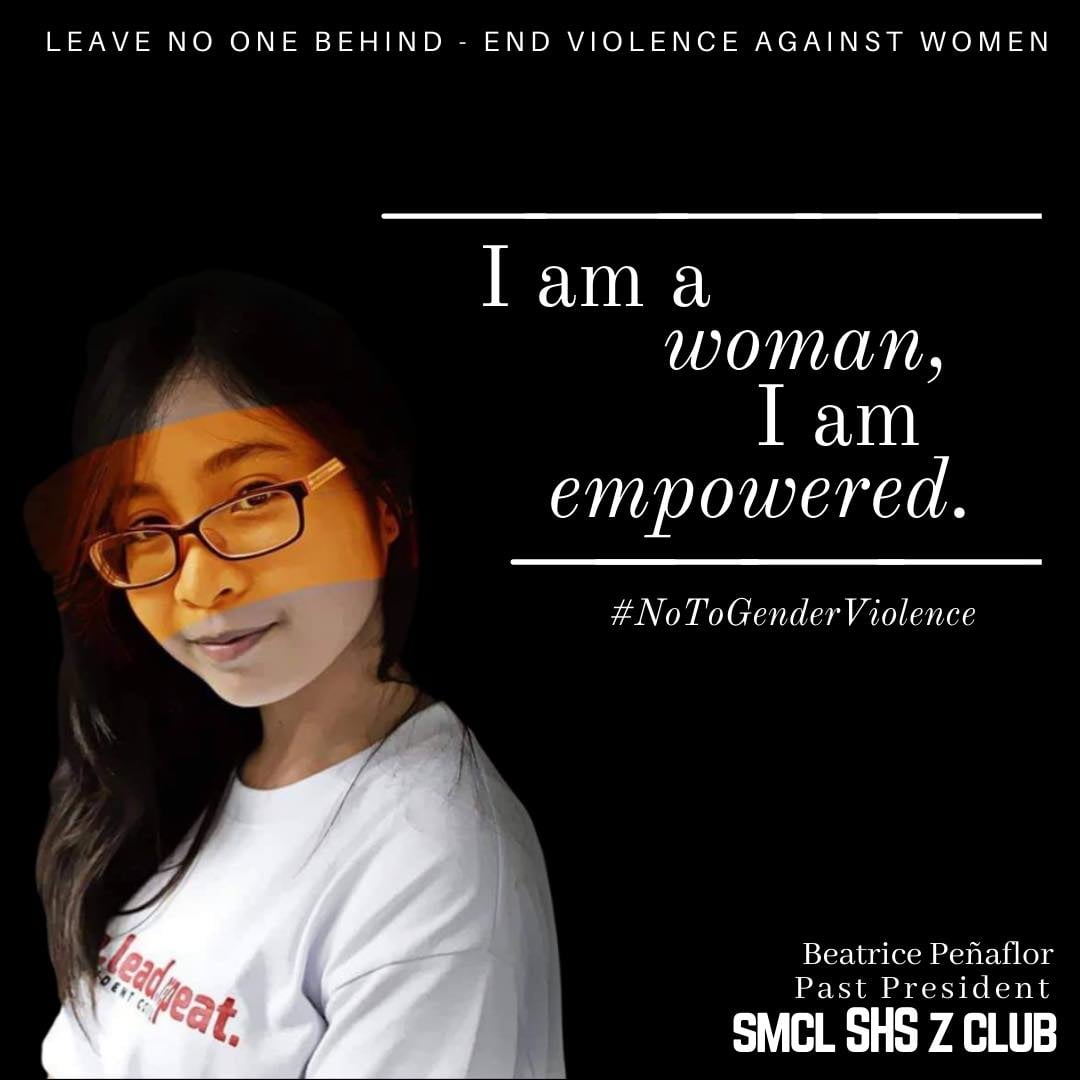
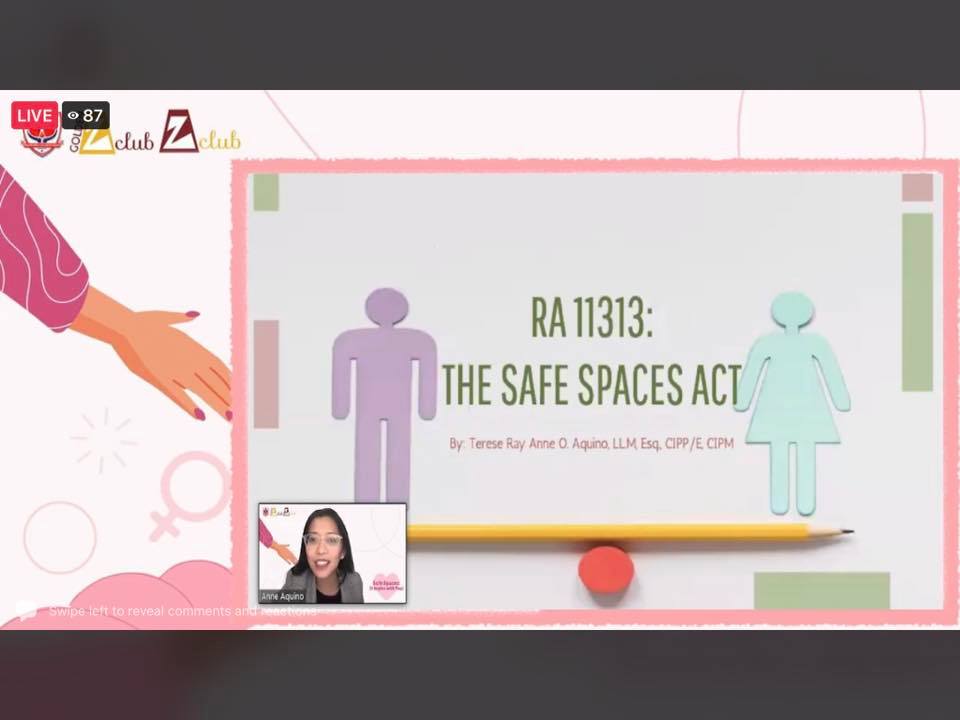
The Saint Michael’s College of Laguna Golden Z and Z Clubs, Philippines, spearheaded the A Safe Space Begins with Me webinar to culminate the 16 Days of Activism Against Gender-Based Violence. The engaging webinar had almost 500 live viewers on Facebook and over 200 attendees on Zoom.
Attorney Terese Tra Aquino, a senior partner at Estrada Aquino Law, did a comprehensive and insightful lecture during culminating activity observing the club’s 18-day campaign against violence against women and children. Terese discussed online sexual harassment, cyberbullying, voyeurism and child pornography and the legal repercussions of such crimes.
The virtual participants took a pledge of support to stand with women and girls worldwide and take action to end gender-based violence.
The webinar was created in partnership with the Zonta Club of Laguna and the participation of Z and Golden Z clubs from other schools.
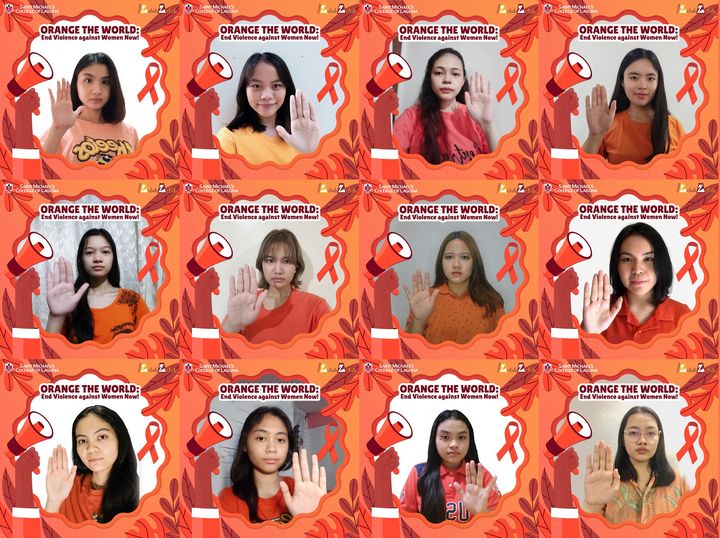
The clubs also chartered inclusive local and international webinars, social media campaigns, virtual assemblies, shared informative videos and more to advocate ending violence against women.
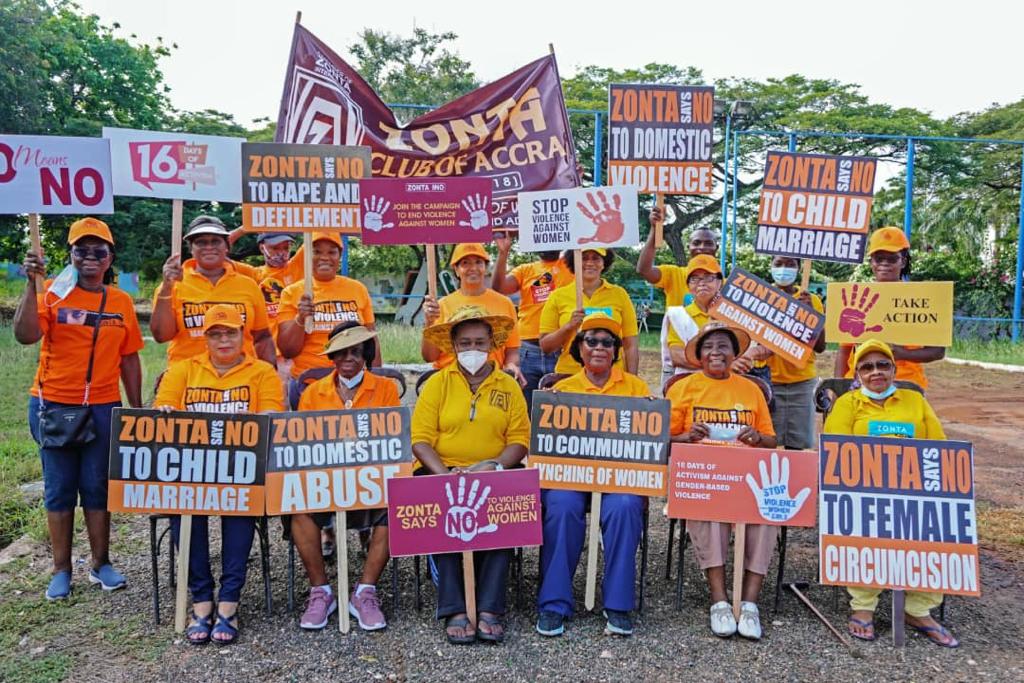
The Zonta Club of Accra, Ghana, and five other clubs made a bold statement saying NO to Violence against Women and Girls. On 27 November, the clubs painted some streets in Cantonments orange and yellow with placards.
Some of them read “Stop Violence against Women” and “NO means NO” as they embarked on an early morning health walk to raise awareness and funds for the cause.
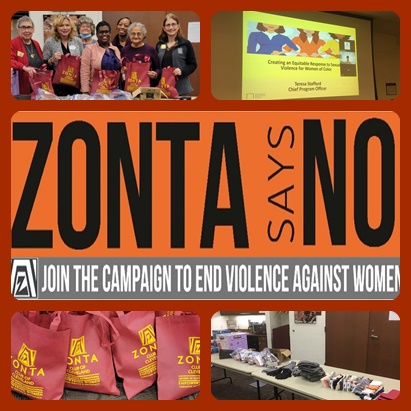
The Zonta Club of Cleveland, USA, had two events to mark the 16 Days of Activism Against Gender-Based Violence.
The first event took place on 18 November, with Ms. Teresa Stafford, Chief Program Officer at the Cleveland Rape Crisis Center as their keynote speaker. The club found her presentation Creating an Equitable Response for Women of Color revealing and captivating.
Following that, they completed our first service project. Ms. Megan Williams, Director of Outreach and Education, was very grateful to the club for their donation.
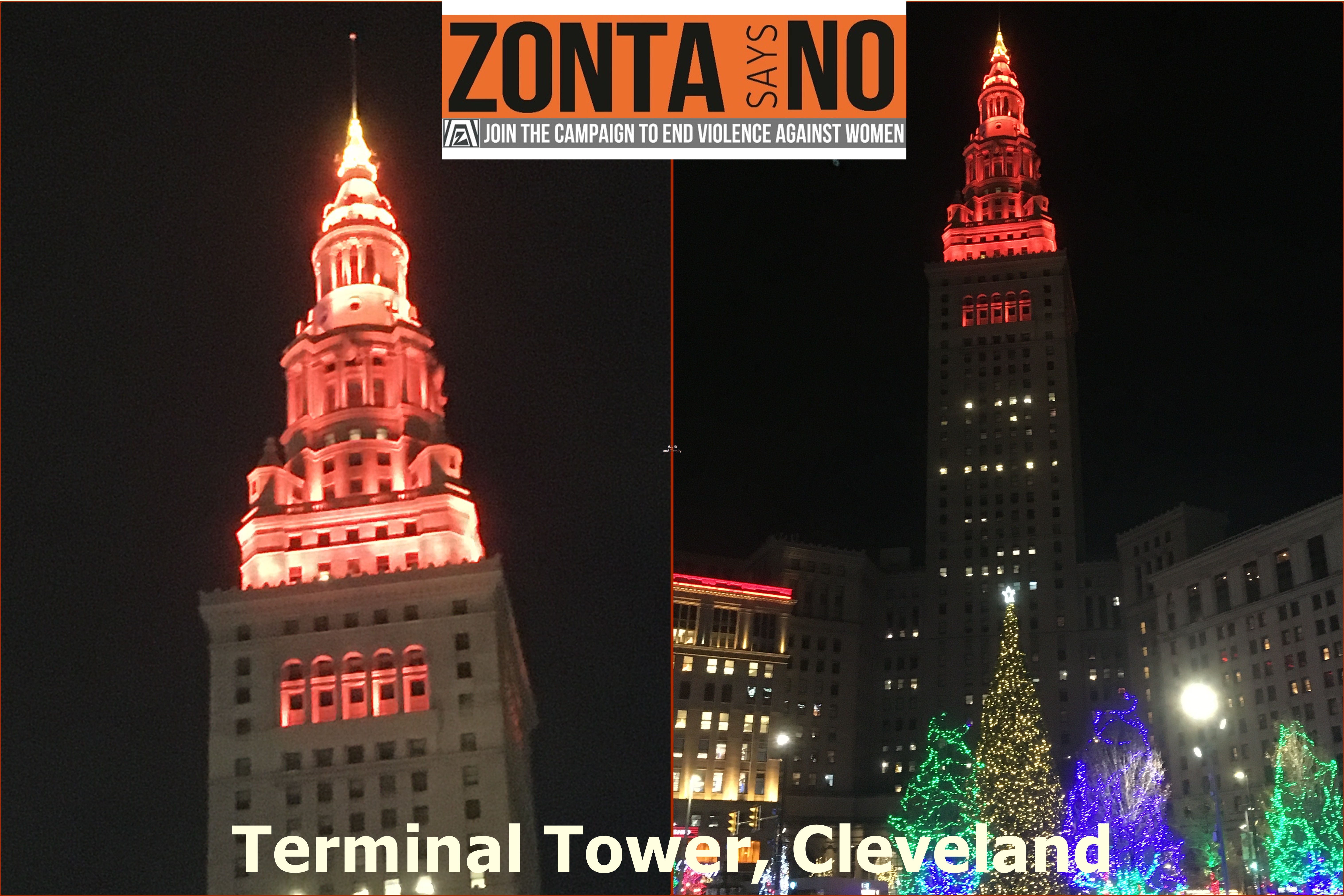
The Terminal Tower lit up with the Zonta Says No color for the second time on 14 December.
A haze of misconceptions obscures the topic of misogyny. Some define it as a deep hatred towards women and girls, while others view it as sexism caused by our society’s history of patriarchy.
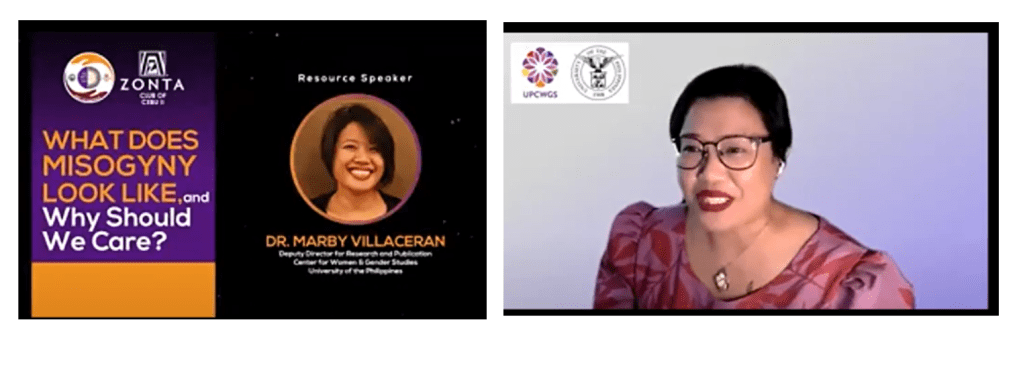
On 30 November, the Zonta Club of Cebu II, Philippines, celebrated the 5th Day of its 18 Days of Activism to End Violence Against Women with a webinar called “What Does Misogyny Look Like and Why Should We Care?”.
Zontian Marietta Malinao welcomed the audience with an empowering statement on the dangers of normalizing misogyny.
“The normalization and pervasiveness of sexism are apparent daily that people fail to notice,” Ms. Malinao said.
Resource speaker, Deputy Director for Research and Publication Center for Women and Gender Studies of the University of the Philippines (UP), Dr. Marby Villaceran, started her discussion through an interactive activity where participants gave three impressions on being a man and woman. Dr. Villaceran then discussed that sex and gender are two different concepts that are greatly interchanged. Society socializes men and women, boys and girls, to conform to assigned sex-characteristic roles and responsibilities.
“These contracts are unwritten, but they are generally understood an,d followed,” Dr. Villaceran added.
Women continuously experience discrimination, exploitation, marginalization, oppression, and subordination (DEMOS). Gender relations are hierarchal, and when accepted as the norm, it preserves the asymmetric power struggle. The efforts of the club and other various organizations advocating for women’s rights and empowerment have made progress towards reducing DEMOS. International instruments are actively coming together to put an end to these observances, namely the Convention on the Elimination of All Forms of Discrimination Against Women (CEDAW), Beijing Platform for Action (BPA), Philippine Commission on Women (PCW), and the UP Center for Women’s and Gender Studies (UPCWGS).
“Violence against women is the most egregious manifestation of women’s subordinate position in society,” Dr. Villaceran argues.
Violence Against Women (VAW) is gender-based and systematic, predominantly about male power and control over women. It is a key feature in patriarchy and abuse that takes many forms. In addition, rape culture is a manifestation of a patriarchal order maintained through violence against women.
As her talk ended, Dr. Villaceran presented the Gender and Development Program or Magna Carta of Women (Republic Act 9710). The program seeks to achieve gender equality and transform society’s social, economic, and political structures. Both men and women benefit from a perspective that does not limit them to be who they want to be.
The Misogyny webinar concluded with the sharing of personal experiences by Celine German Lagundi, one of the founders of Gabriella Youth of the University of San Carlos (USC), and Charlene Virlouvet, a performer from Vagina Monologues.
Women supporters and activists attended the webinar. District Governor Chavali Pamela “Pam” Osathanugrah was also in attendance.








 Join us in saying NO