Zonta Club of Burg Staufenberg/Giessen Area hosts discussion with UNICEF Germany President Maria von Welser

Zonta Club of Burg Staufenberg-Giessen Area.JPG

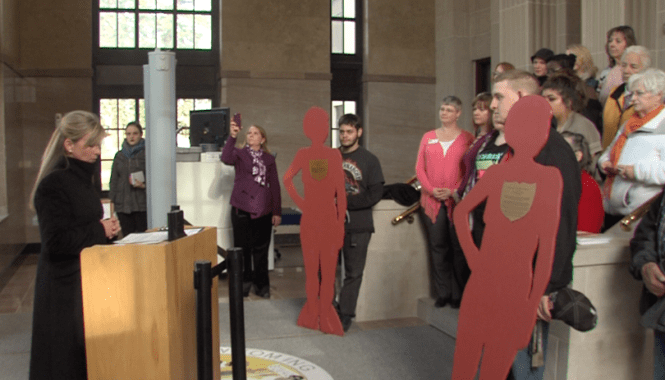
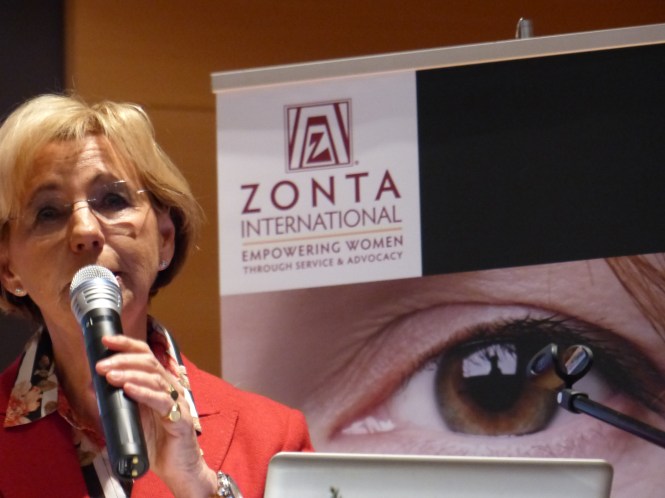
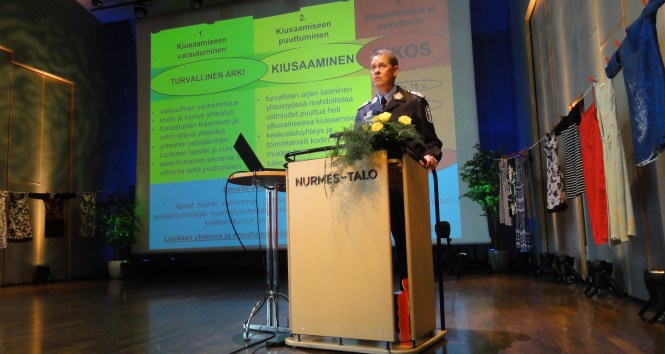
Maria von Welser speaks at Giessen’s city hall

The Zonta Club of Burg Staufenberg/Giessen Area held an event on 25 November in Giessen’s city hall for the Zonta Says NO to Violence Against Women campaign.

Maria von Welser, German television journalist and the president of UNICEF of Germany, spoke about women and girls on their unsafe journey from Syria and Africa to Europe. Afterwards, there was in interesting panel discussion about women and migration.

One hundred and twenty people attended the event and the regional press reported on it.


Zonta Club of Alessandria trains journalists on how to write about violence against women

journalism-class

Journalist Francesco Conti of Radio Gold displays a Zonta Says NO to Violence Against Women bracelet after attending the journalism master class

The Zonta Club of Alessandria was very active during the Zonta Says NO to Violence Against Women campaign. The first event took place on 18 November, preparing for the International Day to End Violence Against Women.


Together with Associazione Stampa Subalpina (the Journalist Association of Piemonte) and me.dea (an anti-violence organization helping women with Anti-Violence desk and shelter for women), Zonta organized a journalism master class to teach journalists about violence language, explaining how press and TV usually describe women killing and violence against women with wrong words, wrong ways, wrong titles.

More than 50 journalists attended the master class. First, they were taught to understand violence and what happens among victims and offenders. Then, the role played by the police in fighting violence and the need of denounce by the victims. They also discussed the Istanbul Convention.

The course stated that the violence against woman is not a raptus, never. This word reduce the seriousness of this crime, that’s why the word raptus should never be used by the journalist in case of violence against women. It is very important to use the correct words to help the fight against violence.

Zonta Club of Brisbane North advocates for Zonta Says NO to Violence Against Women campaign at local malls

Zonta Club of Brisbane North.JPG

Members of the Zonta Club of Brisbane North, Australia, took their orange lady to local shopping malls and placed campaign materials in public places, such as libraries, to mark the Zonta Saya NO to Violence Against Women Campaign.

The club supplied Zonta information on global domestic violence and local information provided by their state government’s Not Now Not Ever campaign on what to do and where to go for assistance.

Zonta Club of Alessandria supports Relay for Women, hosts FGM workshop at Geneva UN Palace

During the 16 Days of Activism, the Zonta Club of Alessandria, Italy, endorsed the Maana’s model in Ayuub village (Somalia)  to put an end to infibulation, a severe form of female genital mutilation.

The Zonta club and the Stella Bianca Laura Garavelli Association partnered for the Relay for Women. Participants started in Alessandria on 26 November and arrived in Geneva, Switzerland, on 1 December.

Throughout those six days, Zonta and Stella Bianca advocated people on this kind of violence against women to explain that infibulation is not far away from Italian or European people. In Italy, as well as in Germany or in the United Kingdom,  many survivors arrive because parents that run away from their village in Somalia, Kenya, Sudan, Burkina Faso, Cameroon, etc. to save their daughters from being cut.

After running 180 km (about 112 miles), the Relay for Women arrived in Aosta Valley and involved the Zonta Club of Aosta in a public presentation.  Then runners ran for another 200 km (124 miles), and the Relay for Women arrived in Geneva. It was the first time a relay arrived in front of a United Nations Palace.

relay-for-women3

Geneva coordinator for the Zonta International United Nations Committee, Simone Ovart, organized and moderated a workshop at the UN Palace. The Zonta Club of Alessandria introduced the issue, and 2014-2016 International Director Nadia Biancato talked about “Improving women’s health and dignity together.”

Biancato said:

“While meeting people, local authorities and journalists we explain that we have to understand that infibulation is a crime against the humanity, and we cannot close our doors in front of refugees that run away not only from famine or war but even from a tribal tradition that has terrible consequence along the life of its victims. In Italy, law n.7, 9.1.2006 fixes how to prevent, fight and prosecute female genital mutilation, defined “a human rights violation against women’s and girls’ health.

“Our Region, Piemonte, has a program to implement this law, and money to do that.  Victims of mutilation need help, also psychological, to restart a better life. But we must pay attention to avoid that these crimes will be committed in secret in our Country, where immigrants are more and more numerous. We can inform, we have to educate, take every chance to talk about violence against women and mutilation to people, students, healthcare professionals, policemen, lawyers. We must say that  female genital mutilation is one of the worst violence against women,  because is done against young children who have no defense. Let’s talk about it, and we all will better understand the problem, and will be more alert about.

“Nowadays is no more acceptable that children 4-5-9 years old, who will be the women of tomorrow, are abused with this kind of violence by other women for ‘traditional reason.’ No one person, organization, agency or community can eliminate violence against women and girls on their own; we must work together to educate our whole population about what can be done to prevent such a violence, support victims/survivors and their families, and increase support for agencies providing services to those community members.”

A better life without infibulation is possible in Africa. Prof. Luigi Sartore, founder of Associazione Stella Bianca Laura Garavelli, explained how: “Somalia  has been devastated by  25 years tribal conflicts and by the effects of the imposing presence of the Islamic fundamentalism. After the war, Maana Suldaan Abdurahman Ali Issue, daughter of the last Sultan of Merka, offered a shelter for widows and orphans escaping from war in the Ayuub village that become the first ‘infibulation free village’ in Somalia.

“She educated people at all level and she  introduced an alternative ritual. She persuaded religious leaders, thanks to her credibility. But the most important obstacle to this alternative rite was, of course, older women as they were custodians of the local tradition. The new ritual eliminated the trauma, while preserving the cultural path of the girls.After passing the sting the girls legs were tied together with ropes, in order to mimic the real infibulation, so that when the girls returned at hoe, their grandmothers could continue to believe that thing were done in ‘an orthodox’ way.

“The religious leaders persuaded people that infibulation should be banned. The health care team does not practice a real cut but a small puncture at clitoral level in order to release only a few drops of blood with a sterile needle or a blood sampling needle (lancet). Maana also intervened on age, involving not girls of 3-4 years but 7. If once the ritual was with the deafening sound of drums to cover the screams of the child, the new ceremony is accompanied by singing, dancing, and the delivery of sweets and chothers as a gift.

“Education is always the key.”

Zonta Club of Pasay and Environs educates students about violence against women and children

zonta-club-of-pasay-and-environsThe Zonta Club of Pasay and Environs, Philippines, launched their Zonta Says NO to Violence Against Women activities on 17 November.

In partnership with the Technological Institute of the Philippines, the club aims to create awareness and help prevent violence against women and children from young graduating students.

The Republic Act 9262of the Philippines was established by the government to protect victims of violence against women and children. The club invited Attorney Leah Fortuna to discuss RA 9262.

The event was very successful and was concluded through releasing of orange balloons as a way for the club to show their support of preventing violence against women and children.

Zonta Club of Alessandria advocates against gender-based violence at local prison

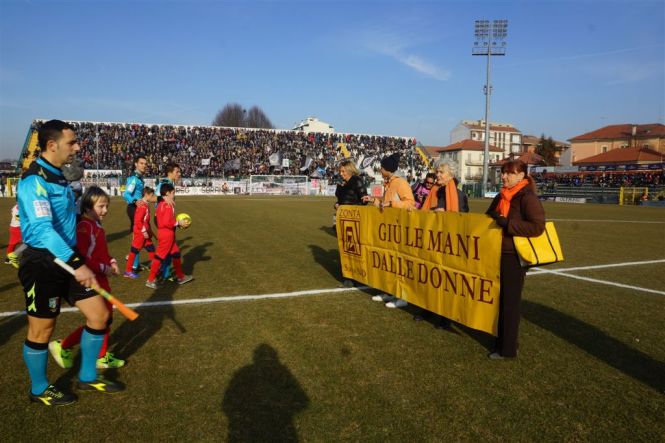
The Zonta Club of Alessandria, Italy, has partnered with the Penal Institution of Alessandria for the Zonta Says NO to Violence Against Women campaign since 2012.

On 25 November, the institution male inmates honored a moment of silence to remember female victims of violence. Every 10 December, the inmates attend a meeting with Zontians about human rights.

This year on Human Rights Day, more than 70 participated in a reading directed by Past International Director Nadia Biancato entitled, “Respect Is Needed.”

Two prisoners, four Zontians and three members of the City of Alessandria Equal Gender Commission read texts about human rights, against all kinds of violence and discrimination. Songs such as “Only Women Bleed” by Etta James and “Endangered Species” by Dianne Reeves were also played.

The local television station covered the event.

The club is one of Alessandria’s most prominent organizations, recognized for its values by all associations and public authorities.

Zonta Club of Mt Barker helps deliver domestic violence education program to young students

The Zonta Club of Mt Barker, Australia, partners with the local domestic violence unit of South Australia Police (SAPOL), a mental health worker from Child and Adolescent Mental Health Service (CAHMS) and the Eastern Fleurieu School’s campuses to deliver the Expect Respect program to 6th year students, ages 11-12.

The program teaches the children about respectful relationships, domestic violence and bullying. The program is a key tool to help break the cycle of domestic violence that can run in families by teaching the children how recognize the various forms of domestic violence and also how to recognize other issues that may occur, such as depression and bullying, and where to seek help. This year, 80 students took part in the program.

Each year, with assistance from their art teacher, the students produce a piece of artwork that delivers their own message of what they have learned throughout the program. This year’s theme was about the eye and what it sees, what it chooses not to see and what it decides to take action on. The students drew a picture of an eye and then added a caption or saying from their learning that meant something to them.

The school chose pieces of artwork to be made into a calendar and printed. Each student who participated received a copy of the calendar and the club sold copies to raise funds for next year’s program. The calendar was launched on White Ribbon Day at an assembly held at the school. The school’s principal believes in the program so much that he became a White Ribbon ambassador in 2016.

Zonta Club of Mt Barker students white ribbons.jpg

Through this collaboration, ninth year students from the school volunteered their time as part of their Rite Journey program to make White Ribbon Badges for White Ribbon Day.  The club has expanded this partnership to include other age groups. The ninth year students were given a brief introduction the White Ribbon Day, and there were discussions while they were making the ribbons.

Zonta Club of Bangkok IX educates students, teachers on violence against women and teen pregnancy

Zonta Club of Bangkok IX.jpgOn 17 November, just before the 16 Days of Activism started, the Zonta Club of Bangkok IX hosted a lecture titled, “Stop Violence Against Women & Prevent Teen Mum” for the teachers and students of , Chiangmai Province, Thailand.

During the lectures, statistics, facts and thoughts were given to the students. Guest speakers shared their experiences on family laws, teen pregnancy and teen’s health care. The students were able to get their questions answered as well.

Zonta Club of Savannah conducts ‘Red Sand Project’ for US National Human Trafficking Awareness Day

The Zonta Club of Savannah, USA, observed National Human Trafficking Awareness Day on 11 January by conducting the Red Sand Project in Forsyth Park, a focal area of the city.

Zontians and the general public participated in filling sidewalk cracks in various areas surrounding the park with red sand and placing signs calling on all to stop human trafficking and giving the national hotline number for reporting possible human trafficking activity.

The red sand in the cracks represented a metaphor for being aware of human trafficking and not allowing its victims to “fall through the cracks” of society.  During the course of the day, hundreds of people walked over or drove by the sand-filled cracks.

Zonta Club of Toledo ‘oranges the world’ with photos, testimonies of community leaders

The Zonta Club of Toledo, Canada, made an effort to “orange the world” during the 16 Days of Activism to raise awareness about the global epidemic of violence against women.

As part of the Zonta Says NO to Violence Against Women campaign, they took and posted photos of  of area leaders, educators, and citizen advocates decked out in orange to their Facebook page. Each photo is accompanied by a quote that starts, “I wear orange because …”

Among those wearing orange for this awareness campaign are city and county elected officials, including Lucas County Commissioner Tina Skeldon Wozniak, Toledo Mayor Paula Hicks-Hudson and Maumee Mayor Richard Carr, and Lucas County Juvenile Court Judge Connie Zemmelman, who states, “I wear orange because I see far too many girls who accept violence as a normal, even expected, part of everyday life.  We need to teach all young girls that their bodies are the one thing they have 100% control over.”

sheriff-john-tharpLucas County Sheriff John Tharp (pictured, left), one of several law enforcement officials to weigh in, states, “It’s a world-wide epidemic: 1 out of 4 women faces domestic violence in her life, and 4 million each year. Human trafficking is at its highest peak.” He adds, “We are working hard to combat this crime and support victims in our community.”

john-jezakJohn Jezak (pictured, right), City of Maumee Administrator/ Safety Director, speaks of tragedy that touched him personally when he states, “I wear orange in memory of a friend who lost her life to an abusive boyfriend.”

sharon-gaberDr. Sharon L. Gaber (pictured, left), University of Toledo President, explains, “I wear orange to speak against exploitation of women and children and to give voice to those silenced by abuse at homes and workplaces.” Deidre Lashley of the Bethany House shelter for victims of domestic violence, notes “Abusers exhibit violent behavior over and over and over. Helping women avoid and escape is critical.”

Some participants highlight the need for more and better laws.

Todd Curtis, Perrysburg Township Police, says “Please be aware of new legislation like Monica’s Law — help make sure it passes and is enforced.” This proposed law, Ohio House Bill 362, would increase the penalty against strangulation to a third-degree felony since an attempt to strangle is often a precursor to domestic violence murder.

teresa-fedorOne of Ohio’s strongest advocates for protecting women and girls from human trafficking, State Representative Teresa Fedor (pictured, left), joined in the Zonta Says NO campaign with the following statement: “As all these organizations and individuals  come together to build a coalition, we form ONE powerful voice … that leads the way once again, as Northwest Ohio takes an active stand against gender-based violence. We think globally and act locally. So let’s help ‘Orange the World’ here in our home town.”