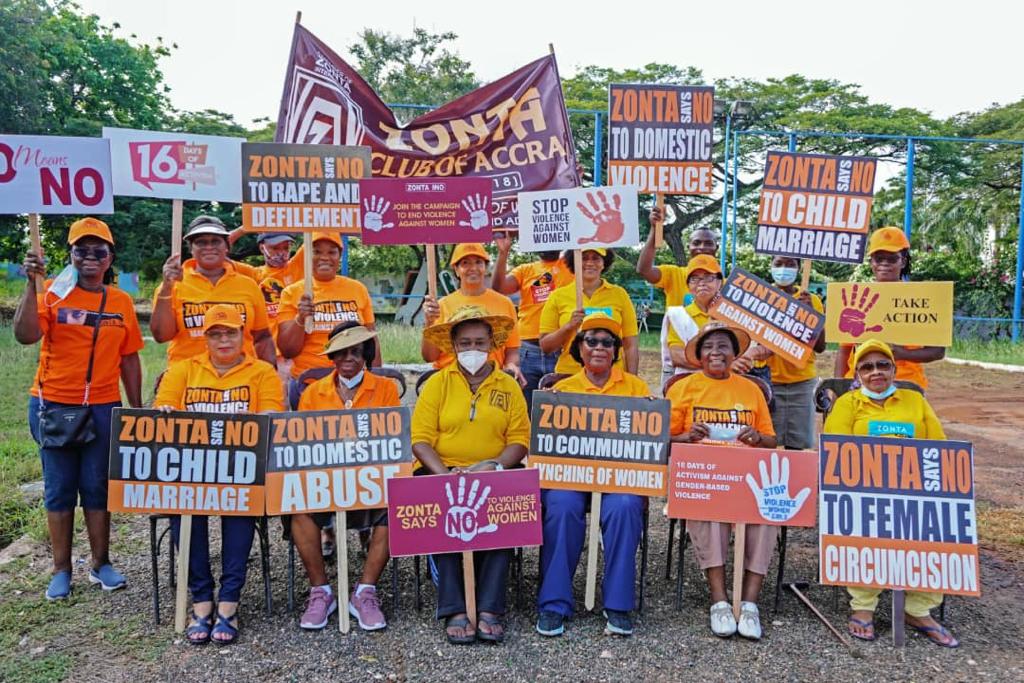
Zonta Clubs in Ghana say NO on the streets

The Zonta Club of Accra, Ghana, and five other clubs made a bold statement saying NO to Violence against Women and Girls. On 27 November, the clubs painted some streets in Cantonments orange and yellow with placards.

Some of them read “Stop Violence against Women” and “NO means NO” as they embarked on an early morning health walk to raise awareness and funds for the cause.

Zonta Club of Cebu II tackles misogyny in a webinar

A haze of misconceptions obscures the topic of misogyny. Some define it as a deep hatred towards women and girls, while others view it as sexism caused by our society’s history of patriarchy.

On 30 November, the Zonta Club of Cebu II, Philippines, celebrated the 5th Day of its 18 Days of Activism to End Violence Against Women with a webinar called “What Does Misogyny Look Like and Why Should We Care?”.

Zontian Marietta Malinao welcomed the audience with an empowering statement on the dangers of normalizing misogyny.

“The normalization and pervasiveness of sexism are apparent daily that people fail to notice,” Ms. Malinao said.

Resource speaker, Deputy Director for Research and Publication Center for Women and Gender Studies of the University of the Philippines (UP), Dr. Marby Villaceran, started her discussion through an interactive activity where participants gave three impressions on being a man and woman. Dr. Villaceran then discussed that sex and gender are two different concepts that are greatly interchanged. Society socializes men and women, boys and girls, to conform to assigned sex-characteristic roles and responsibilities.

“These contracts are unwritten, but they are generally understood an,d followed,” Dr. Villaceran added.

Women continuously experience discrimination, exploitation, marginalization, oppression, and subordination (DEMOS). Gender relations are hierarchal, and when accepted as the norm, it preserves the asymmetric power struggle. The efforts of the club and other various organizations advocating for women’s rights and empowerment have made progress towards reducing DEMOS. International instruments are actively coming together to put an end to these observances, namely the Convention on the Elimination of All Forms of Discrimination Against Women (CEDAW), Beijing Platform for Action (BPA), Philippine Commission on Women (PCW), and the UP Center for Women’s and Gender Studies (UPCWGS).

“Violence against women is the most egregious manifestation of women’s subordinate position in society,” Dr. Villaceran argues.

Violence Against Women (VAW) is gender-based and systematic, predominantly about male power and control over women. It is a key feature in patriarchy and abuse that takes many forms. In addition, rape culture is a manifestation of a patriarchal order maintained through violence against women.

As her talk ended, Dr. Villaceran presented the Gender and Development Program or Magna Carta of Women (Republic Act 9710). The program seeks to achieve gender equality and transform society’s social, economic, and political structures. Both men and women benefit from a perspective that does not limit them to be who they want to be.

The Misogyny webinar concluded with the sharing of personal experiences by Celine German Lagundi, one of the founders of Gabriella Youth of the University of San Carlos (USC), and Charlene Virlouvet, a performer from Vagina Monologues.

Women supporters and activists attended the webinar. District Governor Chavali Pamela “Pam” Osathanugrah was also in attendance.

Zonta Club of Tokyo II meets together for Zonta Says NO

The Zonta Club of Tokyo II, Japan, held its monthly meeting in December as Zonta Says NO Day. The club held a study session to give the members a better understanding of its activities. They also went through the information from the November newsletter and had a report from a member who participated in Zonta Says NO to Violence Against Women virtual summit.

Although the club is still having online meetings due to COVID-19, they are making an effort to continue their activities for women and girls around the world.

Frankfurt am Main lights up in orange

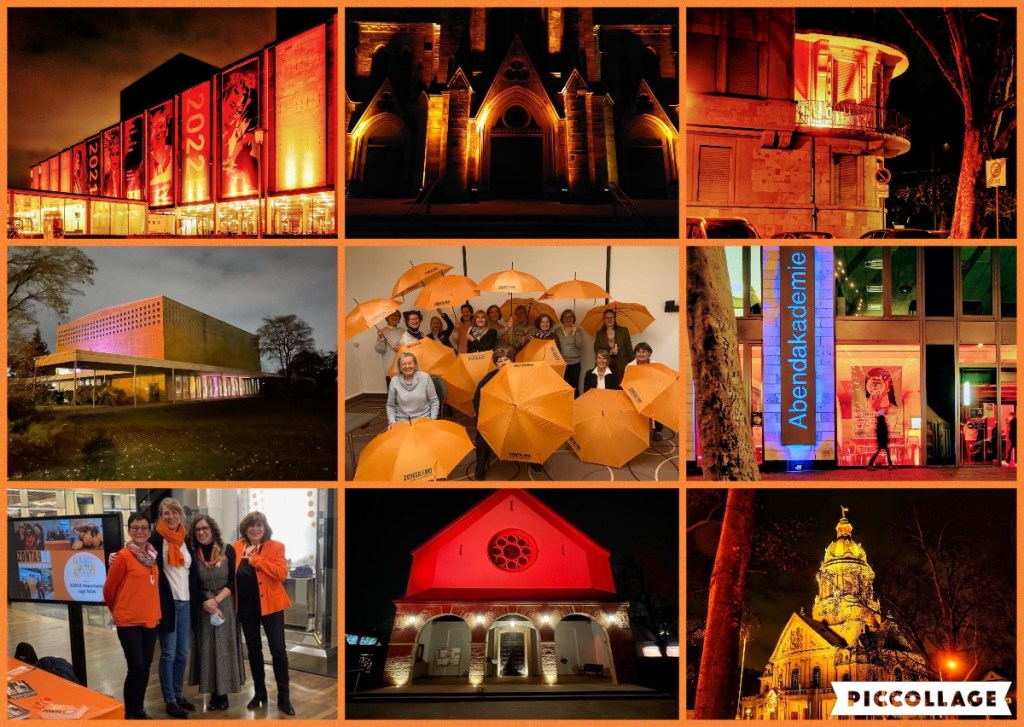
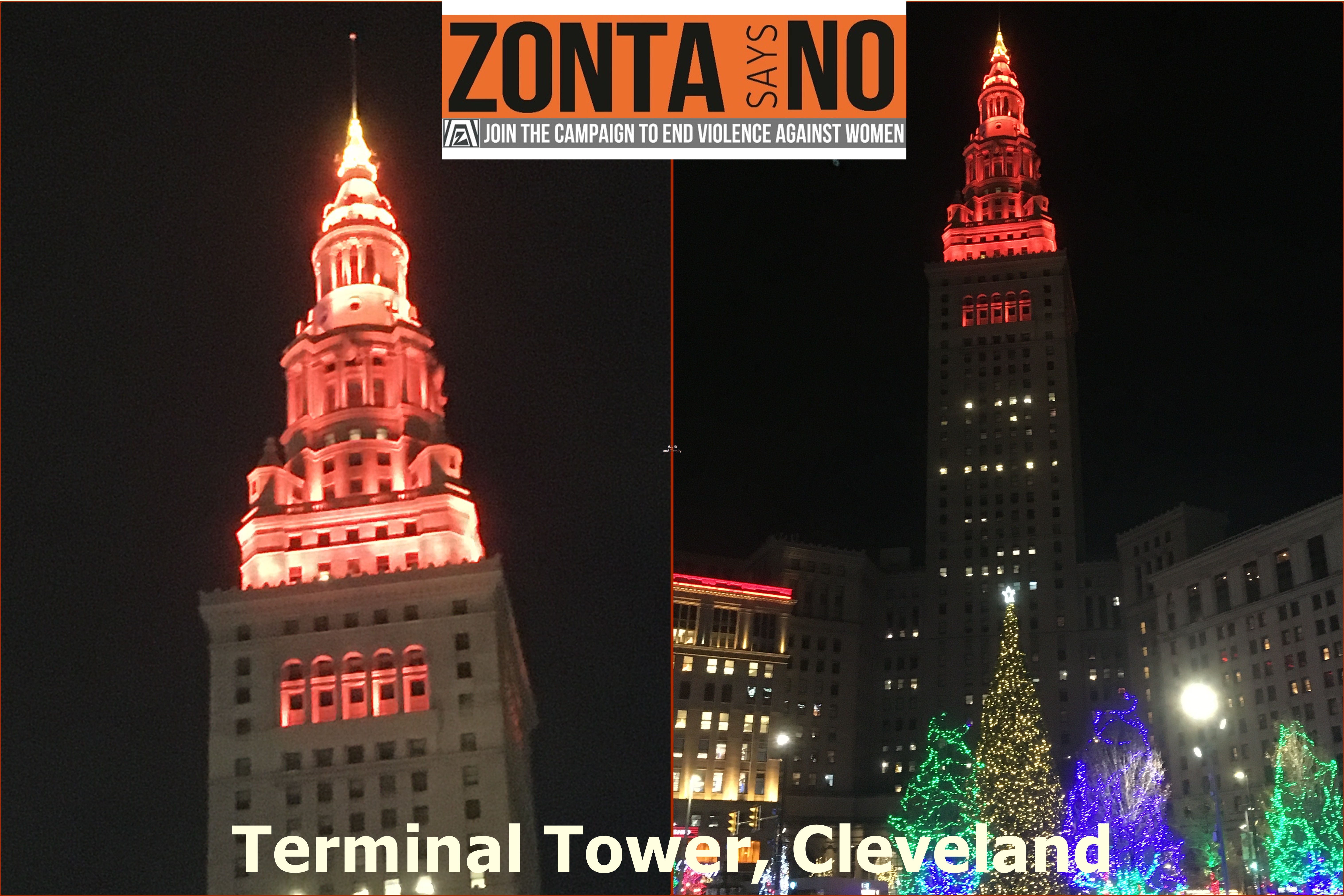
In a concerted effort, the Zonta Club of Frankfurt am Main and the Zonta Club of Frankfurt II Rhein-Main, Germany, managed to “orange” over 30 buildings in Frankfurt am Main on 25 November. These included landmark buildings such as Paulskirche, Alte Oper and many business skyscrapers.

The clubs cooperated with the city’s Frauenreferat (Department of Women’s Affairs of Frankfurt am Main) to raise awareness about the violence that affects women and girls. Zonta’s voice was also heard during a demonstration throughout the city center. Renate Mack, vice president of the Zonta Club of Frankfurt am Main, highlighted the 2020 violence crime figures and advocated for the implementation of the Istanbul convention by creating a central coordinating infrastructure for all efforts in combatting violence against women.

Additionally, banners on four bridges over central streets in Frankfurt drew attention to the Zonta says NO Campaign and advertised the general emergency phone number for women seeking support. The clubs also used social media in their Zonta Says NO campaign. On Instagram, all joining buildings were welcomed, and further information was published. Thus, sharing with friends and associations awareness was furthered about the violence that affects women and girls.

The clubs thank all their partners and look forward to the next Zonta says NO campaign in 2022.

The SkyWheel of Myrtle Beach Goes Orange

The Zonta Club of Myrtle Beach, USA, asked the owner of the Myrtle Beach SkyWheel and the ferris wheel to light up both wheels in orange on 10 December in honor of Human Rights Day.

The day is also the last day of the UN’s 16 Days of Activism Against Gender-based Violence, observed by Zonta International. By lighting up the shoreline orange, the people of the Myrtle Beach area, including those on ships and boats sailing the Atlantic, will become energetic and filled with happiness rather than despair.

The UN chose the color orange as it symbolizes peace. It brings out the best in people, and humanity, as it shines its light on human rights enjoyed by all, as we are all one family.

The owner agreed to the club’s request and supports the Zonta Says NO message.

Zonta Club of Findlay plans activities to say NO

The Zonta Club of Findlay, USA, was thrilled to successfully organize two major events for this year’s 16 Days of Activism Against Gender-Based Violence from 25 November – 10 December. 

Of course, there were other more minor daily activities for club members to support. Here are the highlights from those 16 Days. 

Event 1 

On 29 November, the club held a public event to release orange balloons in front of the main courthouse in downtown Findlay. Findlay’s Mayor and a City Commissioner, friends and family attended the event.

Following a brief introduction by the Advocacy Chair, who cited domestic violence statistics on local and national levels, there was a moment of silence to honor all victims of gender-based violence. Against the bright blue sky, the attendees solemnly released the balloons to soar up and away. The local newspaper reported the event on the front page news. 

Event 2

On 1 December, the club partnered with the Hancock County Chapter of the Northwest Ohio Rescue and Restore Coalition to host a free community event on human trafficking. The two-hour event took place at Ritz Auditorium on the University of Findlay campus. 

The club blanketed Findlay with flyers and invitations by email, mailings and handouts. The invitees ranged from school counselors, community leaders and businesses to other District 5 Clubs and local service organizations. 

Noted speakers included Ohio’s State Senator Theresa Fedor, who has been working for 16 years to address the rescued and recovered victims of human trafficking and their traffickers. In addition, leaders from Findlay’s Center for Safe and Healthy Children, Truckers Against Trafficking, Sexual Assault Nurse Examiners, a forensic anthropology professor and seminary students presented staggering information during this impactful evening of education. 

The biggest challenge in trafficking is the lack of facilities for victims to reside while undergoing reeducation and support to pursue a different life. Many of them learned life skills such as creating a resume and dressing for an interview – skills that traffickers denied them. 

The club also hosted several smaller Zonta Says NO activities:

  • They set up a Zonta Says NO to Domestic Violence display at the local library. 
  • Members used an orange lightbulb inside or outside the house every night. 
  • They distributed domestic violence, child marriage and other informational packets to passersby on the city’s main street. 
  • Mailings sent to local restaurants and bars included information on implementing the Angel Shot program to support female patrons who felt unsafe and needed help. The program consists of a poster placed inside women’s restroom stalls with domestic violence hotline contacts and three code words to use with waitstaff to signal what type of help was needed, i.e., escort out, call for an Uber, or call the police. 
  • They requested that local places of worship include a moment of silence on 28 November to remember domestic abuse victims.

Zonta Club of Ashtabula Area lights Ashtabula in orange

The Zonta Club of Ashtabula Area, USA, kicked off the 16 Days of Activism on Monday, 22 November 2021, at the Ashtabula Bridge Street Lift Bridge. The Lift Bridge Association supported the event and the club by lighting the Lift Bridge with orange lights. Orange symbolizes Zonta International’s Zonta Says NO to Violence against Women campaign.

This year, the club also purchased two billboards in Ashtabula to bring even more awareness to finding ways to end gender-based violence.

The Zonta Says No campaign, which began ten years ago, unites Zonta clubs and members worldwide as they raise their voices to bring awareness to this issue and advocate on behalf of violence survivors and victims. Since the onset of COVID-19, violence against women and girls has been rising, especially as people prepare for the holidays.

Now, more than ever, everyone must work together to end violence with their communities, partners and future generations.

Zonta Club of Ilocos Norte conducts Know Your Rights Webinar

The Zonta Club of Ilocos Norte, Philippines, partnered with the Mariano Marcos CTE Golden Z Club and the Ilocos Norte National High School Z Club to host a Webinar titled Know Your Rights.

The webinar aims to amplify the voices silenced by physical, emotional, verbal and mental abuse. Topics discussed were:

  • Zontian Nataliza Llapitan talked about anti-sexual harassment.
  • Zontian Judge Nida Alejandro taught the attendants about the Anti-Violence Against Women and Children law.

The club wants to gather together virtually and learn how to stop, avoid and end violence against women and children. They invite everyone to value our human rights and strive for equality.

Zonta Club of Kowloon paints activities in orange

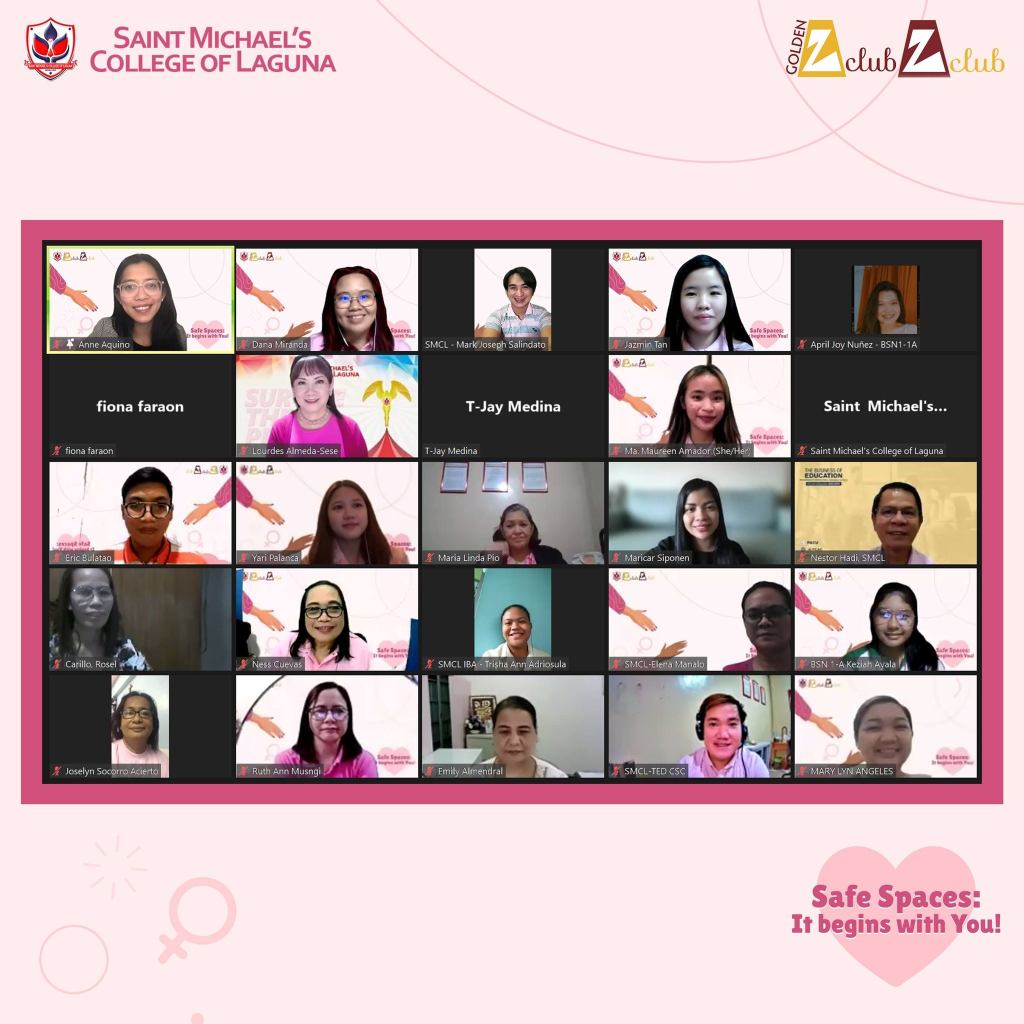
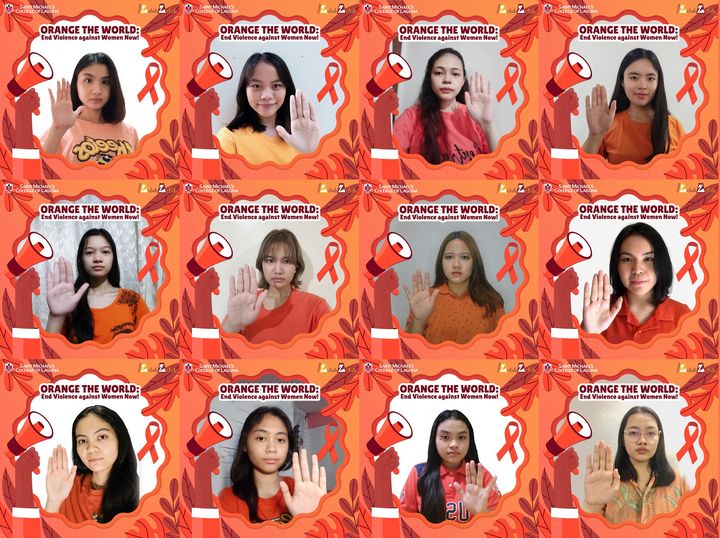
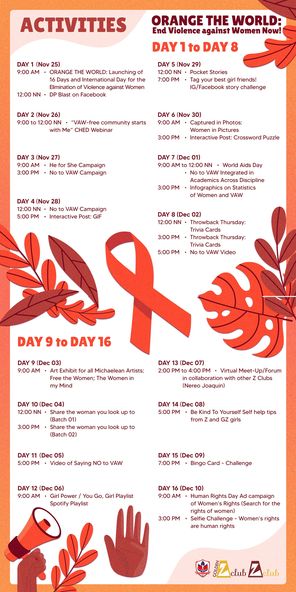
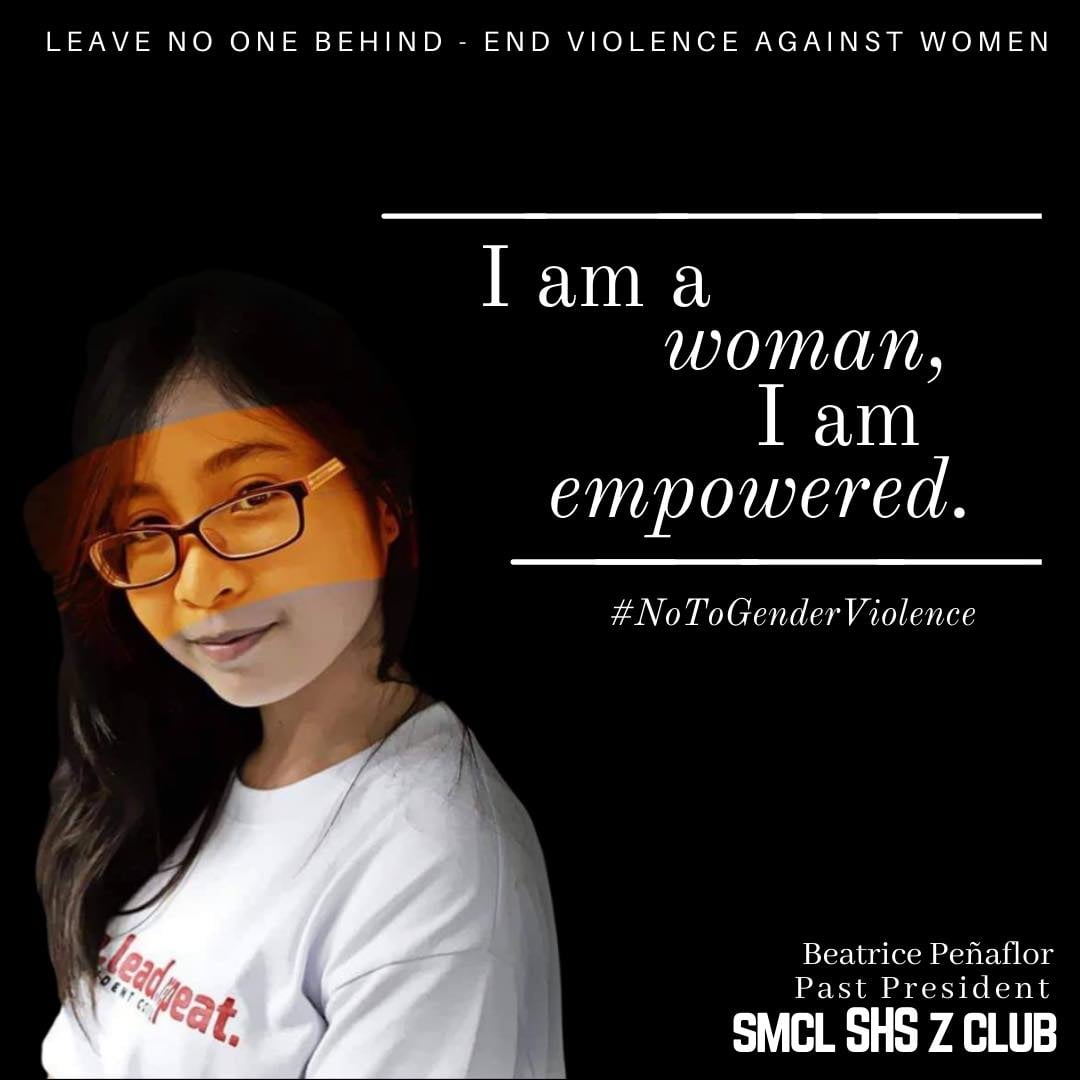
The 16 Days of Activism is essential for raising awareness for the Zonta Says NO campaign. The Zonta Club of Kowloon, Hong Kong, took this year’s opportunity to orange the world for the Golden Z and Z Club members. Many of their student club alumnae and colleagues work in like-minded organizations after graduation. 

The club planned diverse activities to advocate ending violence against women: 

  • The club organized a special Zonta Says NO photo session during their business meeting. They were joined by leaders from their advocacy partners, student club representatives and alumnae. The club created special Zonta Says NO props to make their message loud and clear.
  • During the 16 Days of Activism Against Gender-Based Violence, the club chartered a new Golden Z Club at the Hong Kong Nang Yan College of Higher Education and a new Z Club at the Immaculate Heart of Mary College. The club briefed the students on Zonta International, including the club’s major activities and the Zonta Says NO campaign. The headmistress recommended more than 40 students become chartered members of the new Z club, and they elected a male colleague as charter president.
  • Although the club sponsors 3 Golden Z and 7 Z clubs, they all remained active throughout the pandemic. The club lights up its installation ceremonies in orange in November and December every year. Due to some schools not resuming in-person lessons, the installation was held online. The students used orange background templates to indicate their support for Zonta Says NO.

The club hopes to continue grooming its student members to become civically conscious and recruiting them to become full-fledged members when they grow up.

Statistics from the Hong Kong Federation of Women’s Centers, which operate many women’s helplines in Hong Kong, indicated that they received double the number of calls related to domestic violence between April 2018- March 2020. The 16 Days of Activism Against Gender-Based Violence is necessary to raise awareness and call for the prevention and elimination of violence against women and girls.

In the news: Facing domestic violence; abusive situations aren’t always as they appear  


Inge Simmerman with one of her signs at Route 5 and East Main Street in Amsterdam on Thursday.PHOTOGRAPHER: PETER R. BARBER | Inge Simmerman with one of her signs at Route 5 and East Main Street in Amsterdam on Thursday.

Candy Gurtler doesn’t match the image that most people picture when they think about domestic violence. Neither does Jennifer Jennings or LisaMarie Soudelier. In fact, their experiences of domestic violence don’t match common conception, either. These women weren’t necessarily bloodied in brutal beatings; they weren’t threatened with weapons. But that doesn’t make what they went through any less awful. 

Their experiences represent the complex, pixelated image of domestic violence — and that lack of clarity is exactly why the issue can be so difficult for many people to truly comprehend. It’s a dynamic that awareness campaigns like Zonta International’s 16 Days of Activism Against Gender-Based Violence are hoping to address, bringing to light a situation that has been referred to as the “shadow pandemic,” even as police response data, when taken purely at face value, cut against that narrative.   

“If there is one thing in the community that I could change related to domestic violence, it is the image that pops in everyone’s head when you say ‘domestic violence,’” Gurtler said. “That image is a woman with a black eye. That is not domestic violence. It could be. But there is so much more to it.” 

Gurtler, who works as the non-residential advocate at The Family Counseling Center in Gloversville, knows from her own experience. She said she is 13 years removed from a 13-year abusive relationship with another woman. There was no single defining argument during which it all came crashing down, Gurtler said. Rather, Gurtler said, she experienced an erosion of her own self-worth. 

“You’re a terrible person, you’re stupid. When you hear these things every single day, it weakens you. It takes all the strength and resolve that you have, and it makes it very difficult for you when you do leave to be successful.”

Zonta International, a global organization of professionals empowering women worldwide through service and advocacy, is hoping its recent campaign, which ended Friday but is still evidenced locally by orange signs around Schenectady, Montgomery and Fulton counties, can help limit the amount of women who have to go through what Gurtler and too many others have gone through by spotlighting domestic violence and human trafficking.  

“We use that period of time to make people aware in their own communities, in their own towns, that this is an issue,” said Inge Zimmerman, Advocacy Chair of the Zonta Club of Montgomery-Fulton, who noted that domestic violence doesn’t discriminate against race, socioeconomic status or anything else. “Violence against women is not something that is arm’s length away. It is happening to our neighbors, it’s happening to our family members.”
 
Numbers don’t lie–but they also don’t tell the whole story
And yet, if you look at law-enforcement response numbers, you’d be tempted to think that domestic violence is on the decline — or at least not escalating. 

In Montgomery County, law enforcement responded to 282 cases in 2017, 245 cases in 2018, 195 in 2019 and 219 in 2020, according to numbers from New York State’s Division of Criminal Justice Services. Meanwhile, Fulton County saw 567 and 572 cases in 2017 and 2018 compared to just 378 cases in 2020, according to the state. In Schenectady County, the numbers have held relatively steady, with 1,420 domestic violence incidents in 2017 compared to 1,435 in 2020, the data show.   

These numbers are surprising, even to those in law enforcement. 

“On paper it doesn’t seem to have risen. I can definitely tell you that I was surprised,” said Fulton County Sheriff Richard C. Giardino. His jurisdiction responded to 298 domestic violence calls in 2019, 249 in 2020 and 259 in 2021 as of the first week in December, according to numbers supplied by Giardino. “Intuitively, I would say with people locked up in the house together there are going to be more cases, but that’s not what we’ve seen.”

Police and advocates say there could be many explanations for the numbers not matching the reality. It could be that people experiencing abuse don’t have an opportunity to call for help when their abuser is in such close proximity, said Jennings, the Family Counseling Center’s Director of Marketing and Fund Development. It could be because the pandemic has caused financial strain for a lot of people, making victims feel like now is not the time to break free, said Soudelier, The Family Counseling Center’s domestic violence shelter coordinator. It could even be because bars have been closed or at reduced capacity during the pandemic, thus giving rowdy abusers less opportunity to rile each other up, said Sheriff Giardino. 

To be sure, some jurisdictions have seen a climb in cases. For example, the Montgomery County Sheriff’s office fielded 672 domestic dispute calls in 2019 compared to 793 in 2020 and 744 as of the first week of December this year, according to Sheriff Jeff Smith. He said violence has been up across the board during the pandemic, and he thinks an increase in digital communication could be a major contributing factor. 

“Road rage, neighbor disputes, disorderly conduct in general,” Smith said. “We don’t know for sure why, but maybe the fact that people don’t have as much interaction with other people and they are more secluded. Maybe they’ve lost a little bit of compassion and patience in dealing with other people.” 

The fact that numbers can go up in one jurisdiction and not in a neighboring county points to why addressing domestic violence can be so vexing, advocates say. 

“I think the downward trend is a red herring,” said Zonta’s Zimmerman. “If anyone thinks, oh, great, the numbers are going down, that’s not true. If you are in lockdown, do you really think this is the time you are going to report him for beating you up?”  
 
Finding a way out
Advocates explain that getting out of a domestic violence situation is never easy. 
For many, leaving a family is not the way they were raised. 

“Culture has a very large bearing,” Soudelier said. “For instance, I’m Hispanic. In the Hispanic culture, you don’t leave your husband, you don’t leave your home, you don’t leave your children. You are there to take care of your children, take care of your house. Divorce is not an option — doesn’t matter how he is treating you.”

Many conservative cultures prevalent in rural areas often have a similar set of values, Jennings said. 

A huge part of the problem is that the onus to escape falls on the people being abused, almost always requiring them to uproot their lives by leaving their home, often with kids in tow. Then there are jobs to worry about, legal action to take and a constant fear of retaliation. 

“Trying to get out of a domestic violence situation has so many layers of complexity,” Jennings said. “The impact on your livelihood, your safety and shelter, your ability to take care of your children. There are a lot of complex issues that go into someone deciding whether or not to flee their situation.”

If a situation is so physically violent that it’s dangerous, the decision to leave can be clear. But it’s commonly not so obvious, advocates say. That’s because many situations of abuse actually begin with “love bombing,” meaning the abuser is initially sweet, showering the eventual victim with kindness before the situation gradually darkens, according to Jennings. That creates confusion and doubt for the person who is being abused, she said. 

Adding to the difficulty is the fact that court orders of protection don’t always get served immediately. And police response, especially in rural areas, can take time, Gurtler said. 

“I have clients waiting weeks to get the person who is abusing them served,” Gurtler said. “In the meantime, the person is just sitting there, and they have no protection. I can tell you right now I have a client that’s been waiting five days for her order of protection to be served, and she said to me what’s going to be [the police’s] response if [the abuser] does come to me? It takes [police] 45 minutes to come to my house.” 
The pandemic has only hindered the system’s ability to respond, Gurtler said.

Shelters like The Family Counseling Center’s safe dwelling, which can house up to nine residents, have been operating at full capacity, with social distancing requirements complicating where beds can be placed. And because of eviction moratoriums, people who come to shelters are having more trouble securing housing, prompting them to stay in a shelter longer, Gurtler said.  

What’s more, the pandemic has complicated school situations, with bus driver shortages making it harder to find transportation, Gurtler said.  

“So a lot of [people being abused] are electing to stay in their situation because their kids have their own beds and they don’t have to worry about how they are going to get to school,” Gurtler said. 

Help is here 
The good news is that people who are being abused don’t need to feel like they are alone. Resources like The Family Counseling Center are available to provide support. If you’re in trouble, call the 24/7 hotline (518-725-5300). If there isn’t a spot at the safe dwelling facility, The Family Counseling Center’s staff will help you find a place at a different facility. 

At the safe dwelling shelter, where food, clothing and personal hygiene products are provided upon admission, case managers meet with clients daily. Meanwhile, children are transported to their school, or else they are enrolled in a school near the shelter. 

“The day [abuse victims] come in and sign all this paperwork, they are often in shock,” Soudelier said. “What’s going on with my life? What has happened? I usually give them a day or two so they can have time to process.”

Then the work begins. Clients are allowed to stay at the shelter for 90 days, during which time they are helped with everything from job training to finding housing. 

“Abuse does not happen in a set pattern,” Jennings said. “Every victim of abuse that comes to us is unique. You can’t have a checklist. We know what we need to do to help them, but the order and how is always unique to the individual.”

Once housing is secured, The Family Counseling Center stays in touch, whether the client needs help finding furniture or fighting for their rights in court. 

“Whatever it is that you need to do to become safe, we do it with you so you don’t have to do it by yourself,” said Gurtler, who also helps clients who never spend time at a shelter. 
 
Warrior mentality
It is a sad truth that many people who are abused once often find themselves back in abusive situations, advocates say. 

Gurtler said people who are abused are often targeted because they are amazing people. 

“People who are abusive know what to look for when choosing their next victim. They are looking for someone who is nurturing because they need someone to take care of them. They want someone to take all the responsibility for their poor choices,” Gurtler said. “You have all these positive characteristics about you. That’s why he found you.”

Learning to recognize these strengths and feel deserving of love can be a long struggle, advocates say. Especially when triggers of trauma lurk everywhere. Soudelier said she remembers a time long after she had left her abusive relationship when she dropped something and immediately grabbed a bucket and sponge rather than a mop. That’s because her abusive partner used to make her get on the floor to clean.  

“The person would say ‘you don’t know how to use a mop. Get on your hands and knees.’”

Soudelier said when she got the sponge and bucket, her current partner questioned it. She explained that the hands-on cleaning method had been so deeply entrenched in her mind that her response was subconscious. 
“It’s just there,” Soudelier said. 

Moving past abuse takes time, but it’s doable, say advocates. And as Jennings points out, choosing to get help is actually the opposite of being a victim. 

“The people who are coming to us seeking help, they are trying to self-advocate, and that is not a victim mentality. That is a warrior mentality,” Jennings said. “That’s someone who is taking control and doing as much as they can.”

Gurtler said she doesn’t like to refer to herself as a victim or even a “survivor.”

“I considered myself “healed” because I did the work. I don’t have any of those triggers anymore,” she said. “But it takes work. And you have to recognize when these things are happening so that you can work through them.”

Often, the first sign of progress is small. A “crack,” Jennings called it. It could even be a smile. 

That’s what happened for Gurtler. She said she didn’t even realize how dark her relationship had become until she finally left it and was interacting with a colleague. 

“Somebody at work said to me this is the first time I’ve ever heard you laugh.” 

https://dailygazette.com/2021/12/12/facing-domestic-violence-abusive-situations-arent-always-as-they-appear/