
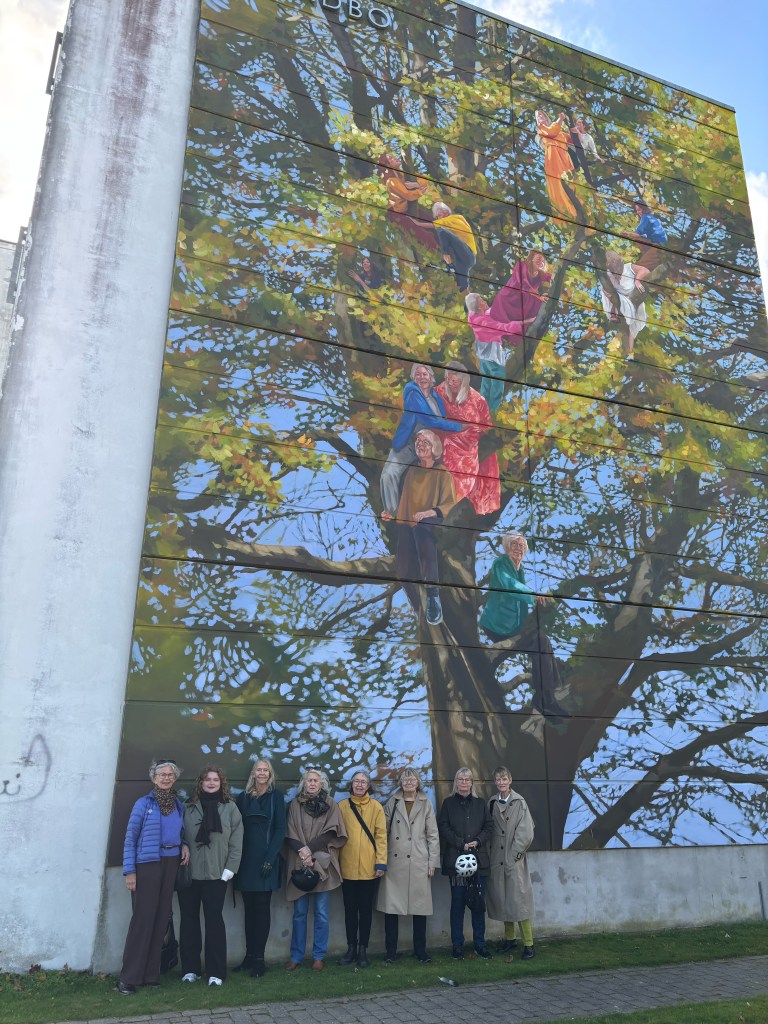
The Zonta Club of Aalborg, Denmark, created a mural to give equality and empowerment a permanent place in the city for women.
in collaboration with KIRK Gallery and artist Rouge Hartley, the large-scale mural was completed in October 2026. Since then, it has quickly become a visible and much-loved addition to the local cityscape, drawing attention from residents, passers-by and local media.
The idea behind the project was simple: to give women a visible and lasting place in the city.
Rather than creating a traditional monument or a temporary campaign installation, Zonta Aalborg chose public art. The club wanted to create something people would encounter naturally in their everyday lives, whether they already knew Zonta or simply happened to pass by.
That visibility was central to the project.
A mural takes up space. It becomes part of its surroundings and remains long after an event or campaign has ended. By placing women and equality directly in public spaces, Zonta Aalborg wanted to turn its values into something tangible: something people could see, experience and talk about.
Rouge Hartley’s artwork shows a group of women climbing through the branches of a tree. They reach toward one another, help each other upward and look confidently into the distance. Several of the women were inspired by members of Zonta Aalborg, giving the mural a deeply personal connection to the club and the women behind the project.
Hartley developed the motif from two ideas: the long history of girls being told they should not climb trees and the hope of one day having a “forest without the wolf.”
In the mural, climbing becomes a symbol of freedom from the expectations and limitations placed on women and girls. It represents growth, independence and empowerment. But just as importantly, the women are not climbing alone. They reach for one another and help each other higher, reflecting the strength of solidarity and the importance of women creating opportunities for one another.
The artwork also conveys joy. The women are active, confident and comfortable in the space they occupy. For Zonta Aalborg, that is essential to the message. Equality is not only about removing barriers and challenging discrimination. It is also about women and girls having the freedom to grow, participate, explore, lead and shape their own lives.
In that way, the mural reflects something fundamental to Zonta’s work: women supporting women and working together toward a future where women and girls can live freely, safely and with dignity.
Choosing a mural was also a distinctly local decision. Aalborg has become known for the large-scale artworks that form part of the city’s visual identity. Zonta Aalborg saw an opportunity to contribute to that landscape while placing women, equality and solidarity at the center of a new public artwork.
Since its completion, the mural has received a warm community response. People have stopped to photograph it, shared images online and engaged with the story behind the women in the branches. Local media coverage has further helped bring both the artwork’s message and Zonta’s work to a wider audience.
And the mural is already becoming more than a finished art project.
During the upcoming 16 Days of Activism against Gender-Based Violence, Zonta Aalborg will place its local campaign banner beneath the mural. The temporary campaign message will stand alongside the mural’s permanent themes of freedom, equality, solidarity and women’s empowerment. For 16 days, the two will speak together. Then the banner will come down, but the mural will remain.
That permanence is perhaps the project’s greatest strength. People do not need an invitation, a ticket or any prior knowledge of Zonta to encounter it. Someone may first notice the colors, the movement or the women among the branches, and only afterward discover the meaning behind the work. In that way, advocacy can begin with something as simple as curiosity.

